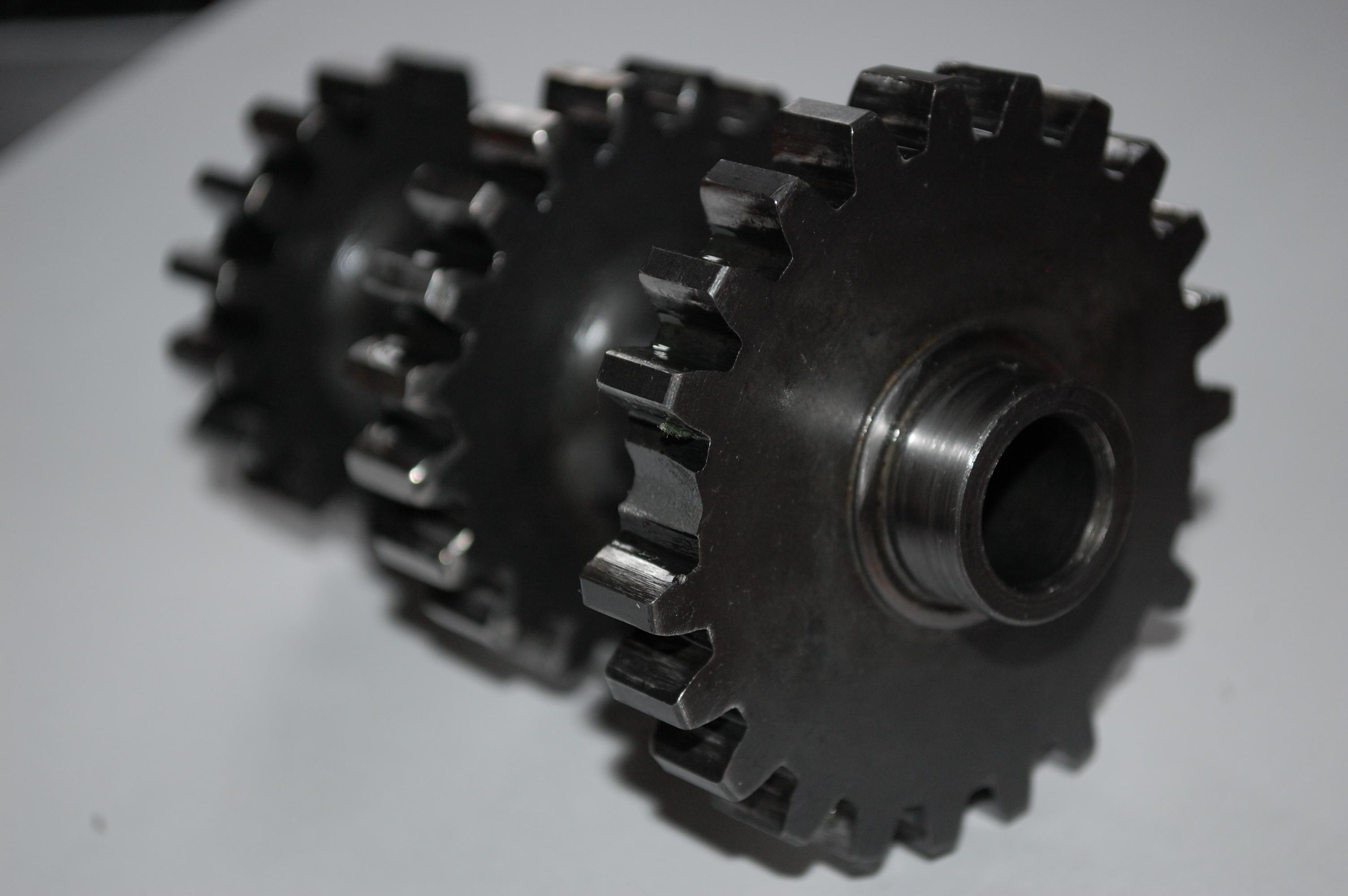
Can you tell what’s going on here? Never a Sunbeam’s strongest point, a total of 4 missing teeth from this CT layshaft were located in the bottom of the gearbox housing. So that’s the 1930 M90 off the road until we can find a replacement set of cogs. It’s hard to tell what has gone wrong with this remanufactured set but a backfire whilst bump-starting the bike seems to have been the final straw for this particular old donkey.
Rich beyond the dreams of avarice
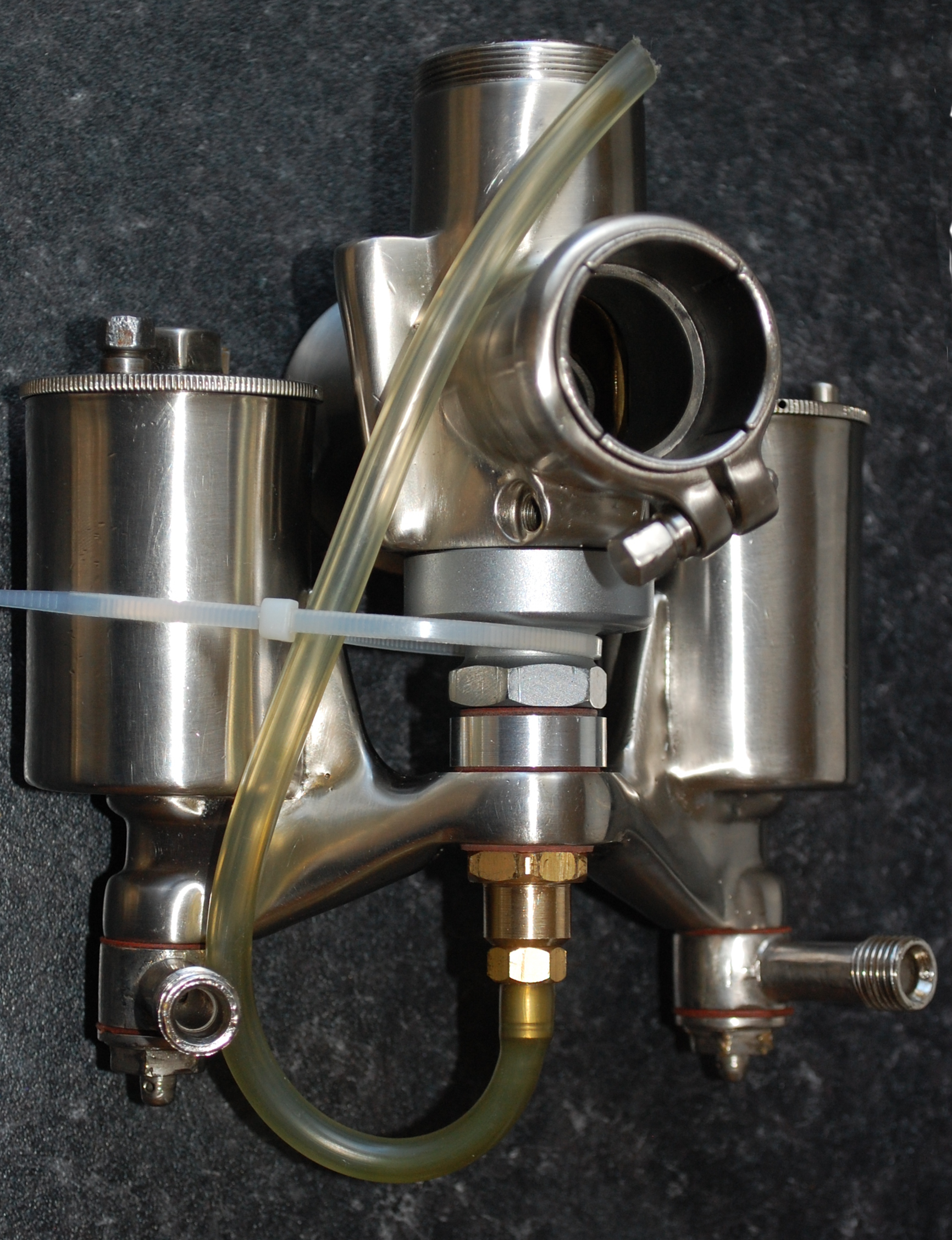
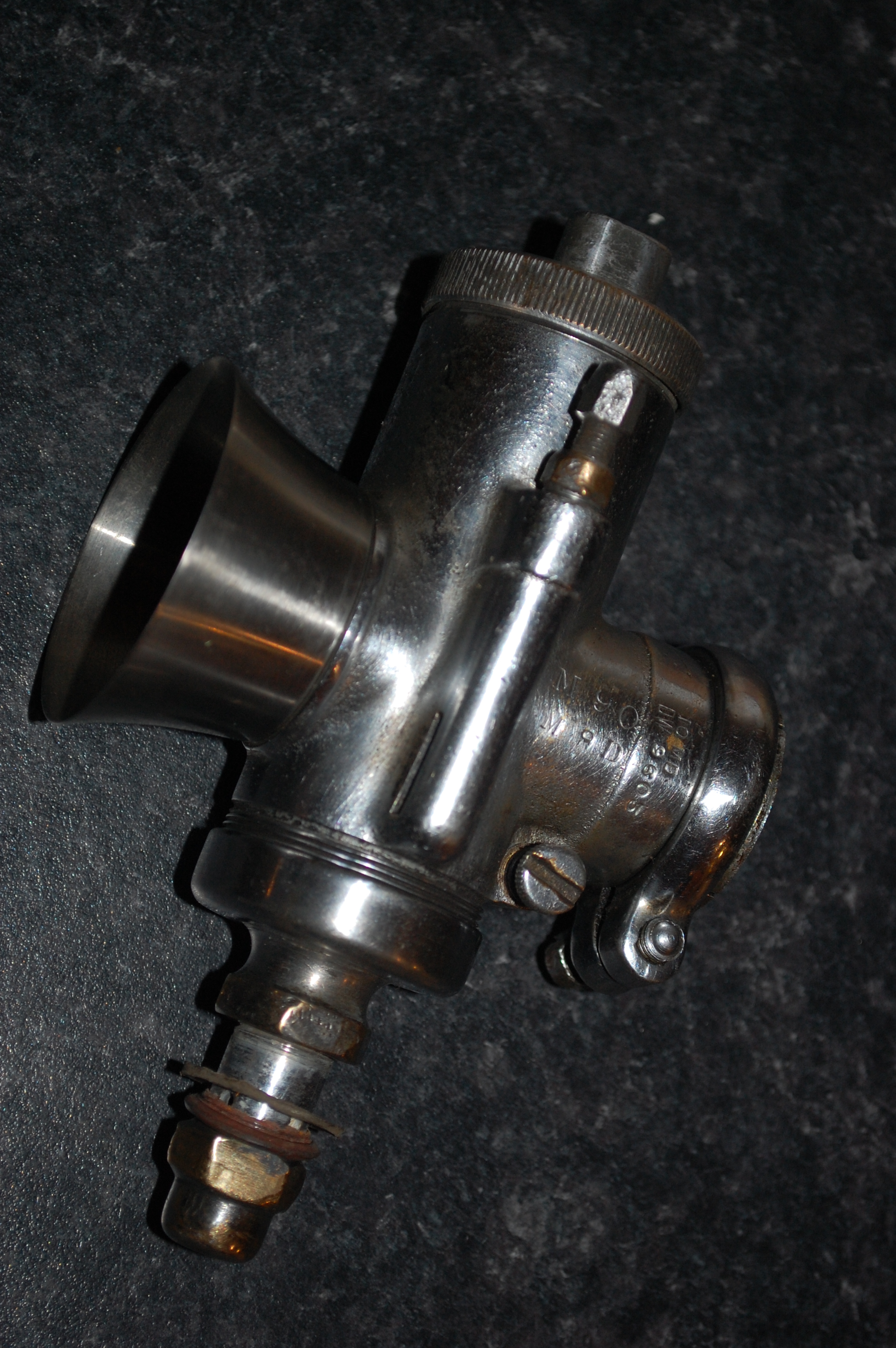
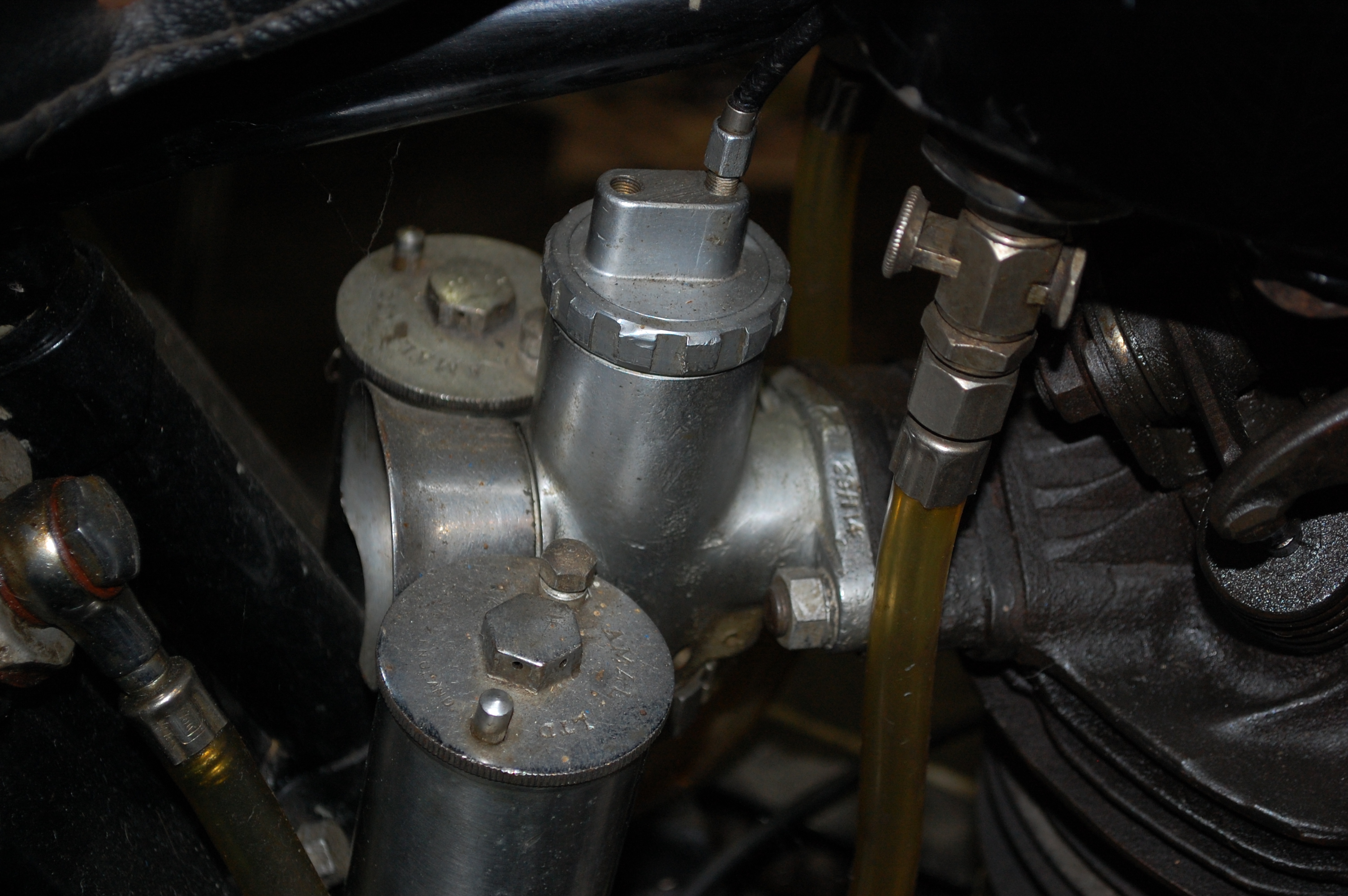
What a lash up!!! Just in case anyone was wondering how the carburation was developing on the 1930 M90 I thought I’d post this picture of the steps taken to check and correct the float height on the Amac 10MDY currently fitted to the bike. It’s the wrong carb for the year and I’d like a later Amal 29/001 if anyone can help but “we are where we are” on this one…
The Amal twin floats are most likely 15 degree items that have been machined to operate on the level so to speak. But they were clearly never designed to operate with the Amac. After making up a new, elongated float chamber holding bolt complete with a spigot for some clear plastic pipe it was easy to see that the float level was some 6mm too high. Adding the aluminium spacer drops the level back downwards and this setup should help with fine tuning once back on the bike. I’ll make up a proper brass spacer and new banjo bolt once the correct dimensions are established as the existing one is too short to work with the spacer.
All this is yet another example of how much time can be spent trying to get groups of disparate components from different eras to work together with some degree of harmony.
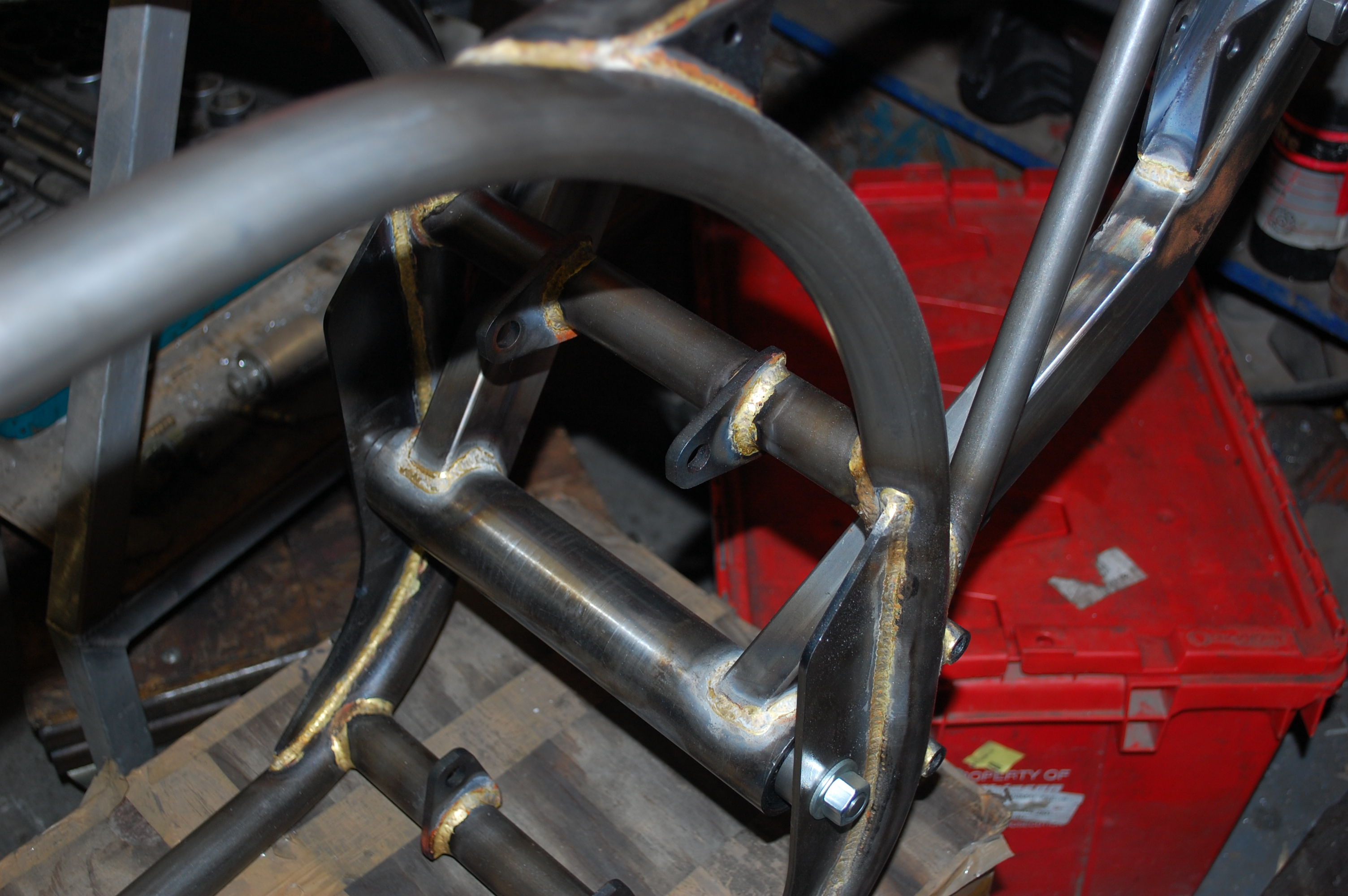
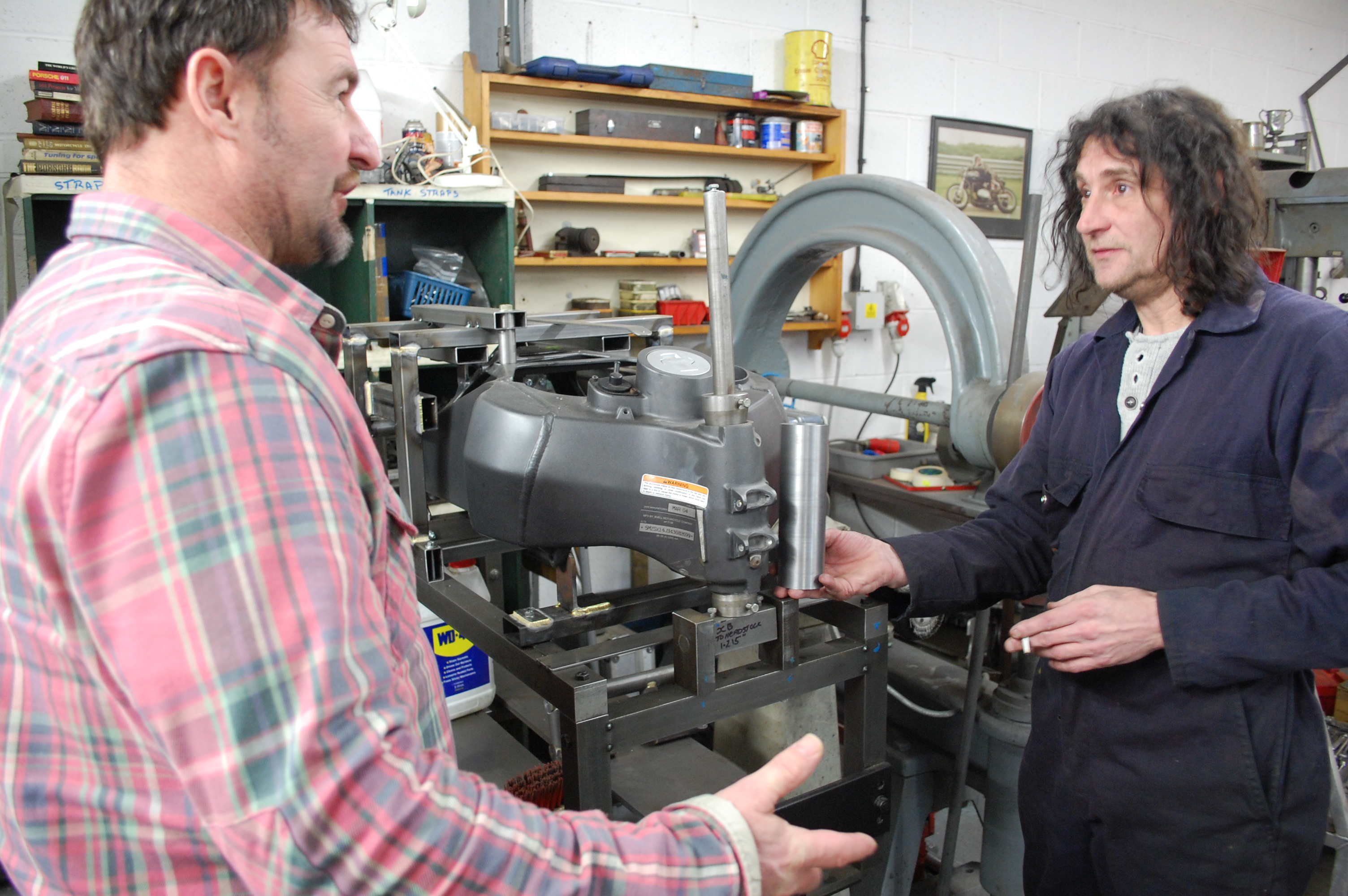
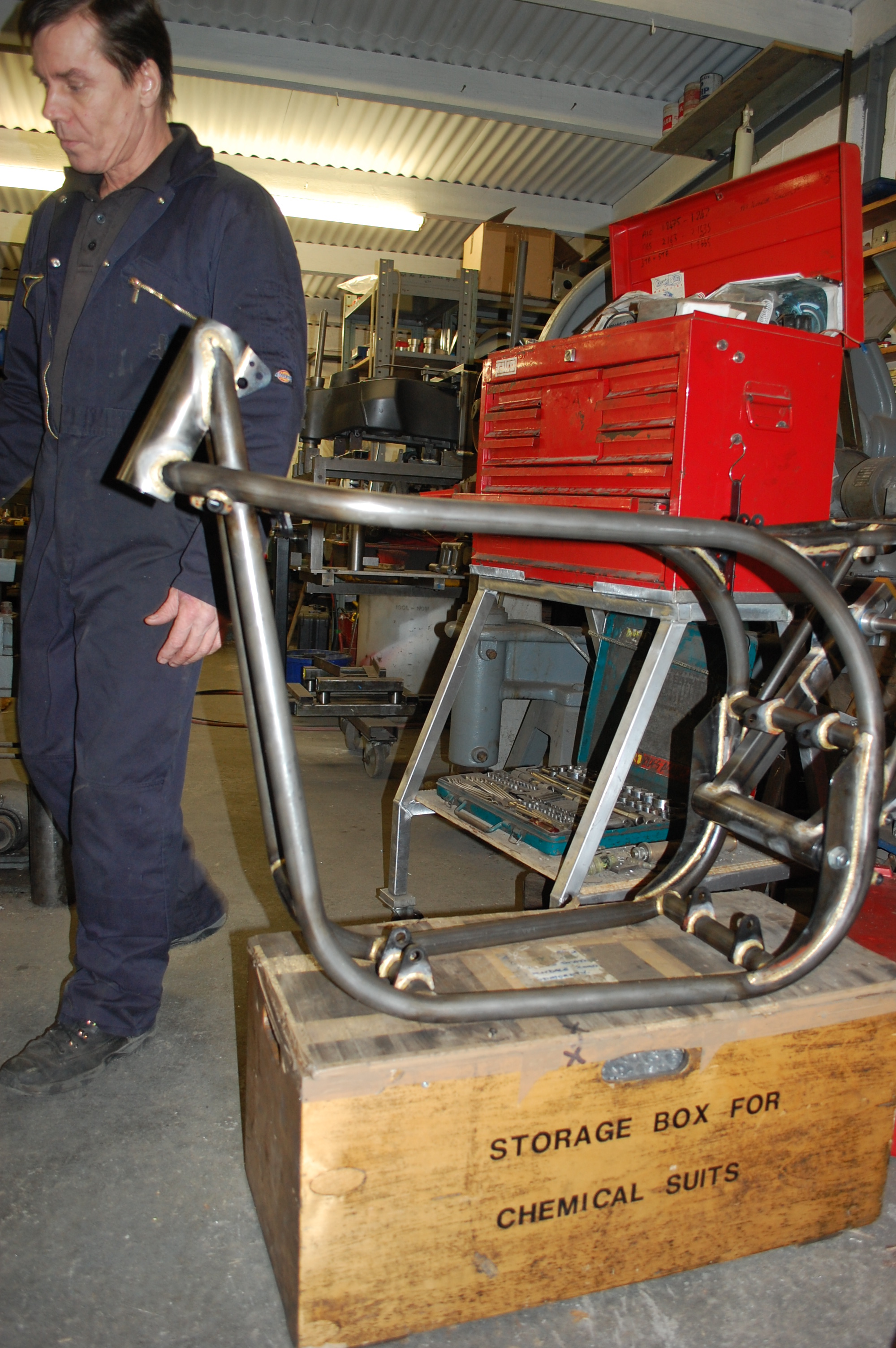
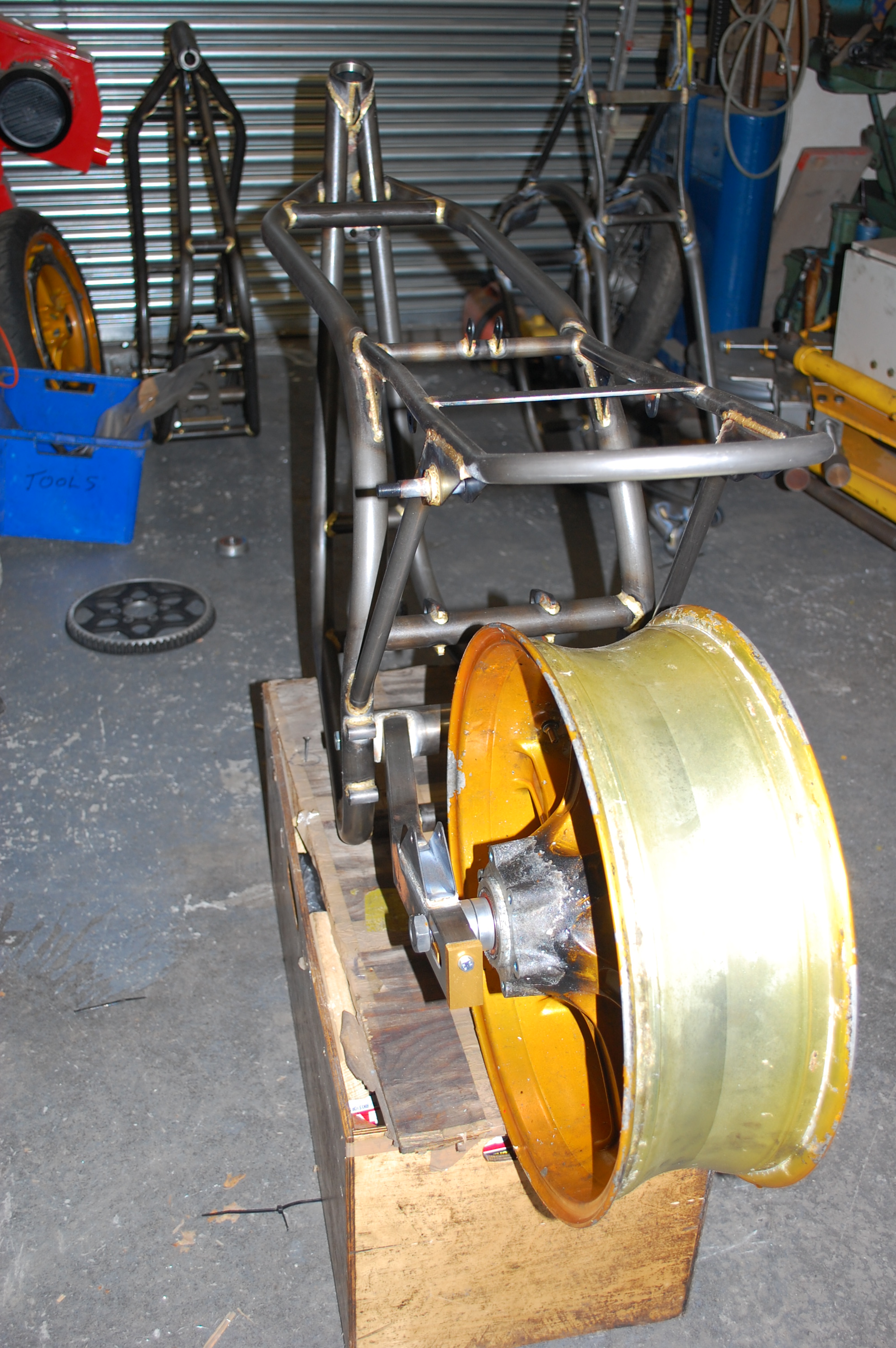
Norley meets Buell Lightning
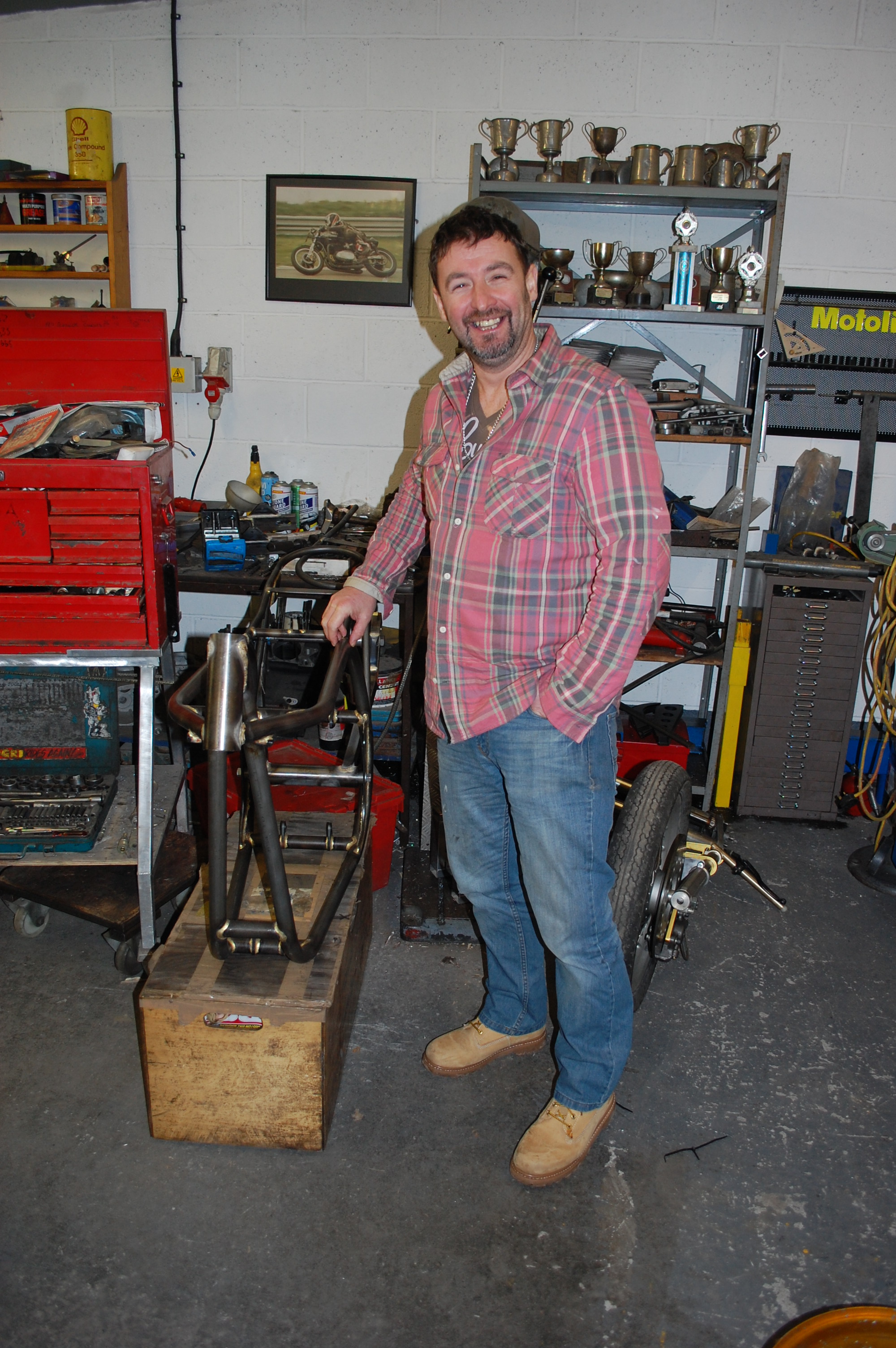
To paraphrase Robert M. Pirsig “it is better for a good idea to destroy a motorcycle than for an owner’s club to destroy a good idea”. Sometimes a chap has to stand upright in the face of those without clear vision and those who would seek to maintain the “status quo”. Nigel O’Connell is just such a man and, close to the Welsh seaside town of Aberystwyth, he found Paul and the guys at Norley frame kits were willing and able to turn his wet dream into cold steel.
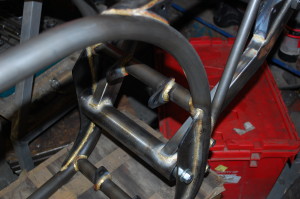
Norley have been making Manx Norton frames for 40 years and also produce frames for other high-profile companies involved in the re-creation of iconic motorcycles. The café-racer things has always appealed and whilst everyone wants an Ogri-bike few can afford the Vincent technology to power it. After spotting this gap in the market a few evenings were spent with beer mats in the pub and the Harley/Buell engine’d Norley frame was born. Weighing in at 15.5kg including swinging arm it shares its geometry with the original Manx Norton featherbed design.
Nigel’s project began with a perfectly good Buell XB12 that was a nice, but not quite mint, example. The sort of bike you’d be happy to ride in all weathers and not have to worry about cleaning nano-seconds afterwards. Yet smart enough to impress outside the pub.
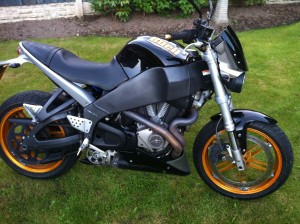
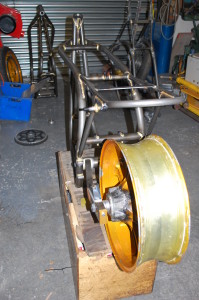
Why not drive it down to Wales in the back of the van and completely dismantle it then? I confess to being initially sceptical but after the first visit and talking with Paul I began to see a chink of light. This is the first XB frame kit that Norley have produced and so the first job was to take the bike apart and build a new jig using the original frame. The motor is suspended from the beam frame in the donor bike and this means some lateral thinking when moving the lump across to its new home.
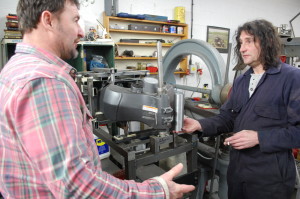
The concept of the new bike is a not-so subtle blend of new and old that retains the essential characteristics of the classic café-racer and the Buell Lightning. To Nigel, this means keeping the original Buell wheels and especially the unique rim-mounted disc brake. A conversion to chain drive is unavoidable and to retain the fat Buell rear wheel caused a number of alignment issues. One rear wheel was sacrificed to the cause and Nigel now has all different varieties of Buell front forks coming from his ears.
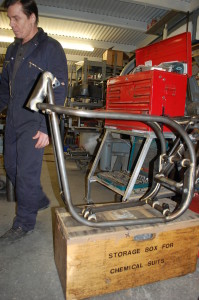
The amazing thing is that it all does fit together and looks in proportion to boot! I’m looking forward to our next visit and a chance to see the completed rolling chassis. There’s a lot of work to do yet of course but this will be a massive step forward and I’ll publish some photos as the project develops.
The Search(er) for Needles & Pins
Nothing is as simple as it seems and when working on old stuff without a point of reference life can get pretty complicated quite rapidly indeed. To cut to the chase… the Amac 10MDY needle jet adapter looks good and puts the new Amal 29 jet in the right place within the jet block but what needle should I use? The original idea was to use an Amal 29 needle along with the 29 needle jet. I’m sure this would work and probably work well but is it “correct”? Whatever correct means….
For me it is all about setting a new datum from which to work when fine tuning the carburation. If the different parts and systems of the carburettor are working in approximately the right regions then changes and adjustments on the bike start to make sense. After all, there’s little point fitting a weaker slide to compensate for an oversized or worn needle. Even the enrichment device might finally start to have some effect – there was no way it could have made any difference with the original settings and state of the carb. An obsession with this comes from hours and cash invested on the dyno with racing two-strokes that are hyper-sensitive to these issues. Even my Triumph Bonnie gained a healthy bhp increase after some careful tweaking from its original “standard” settings to compensate for the fuel that is available today.
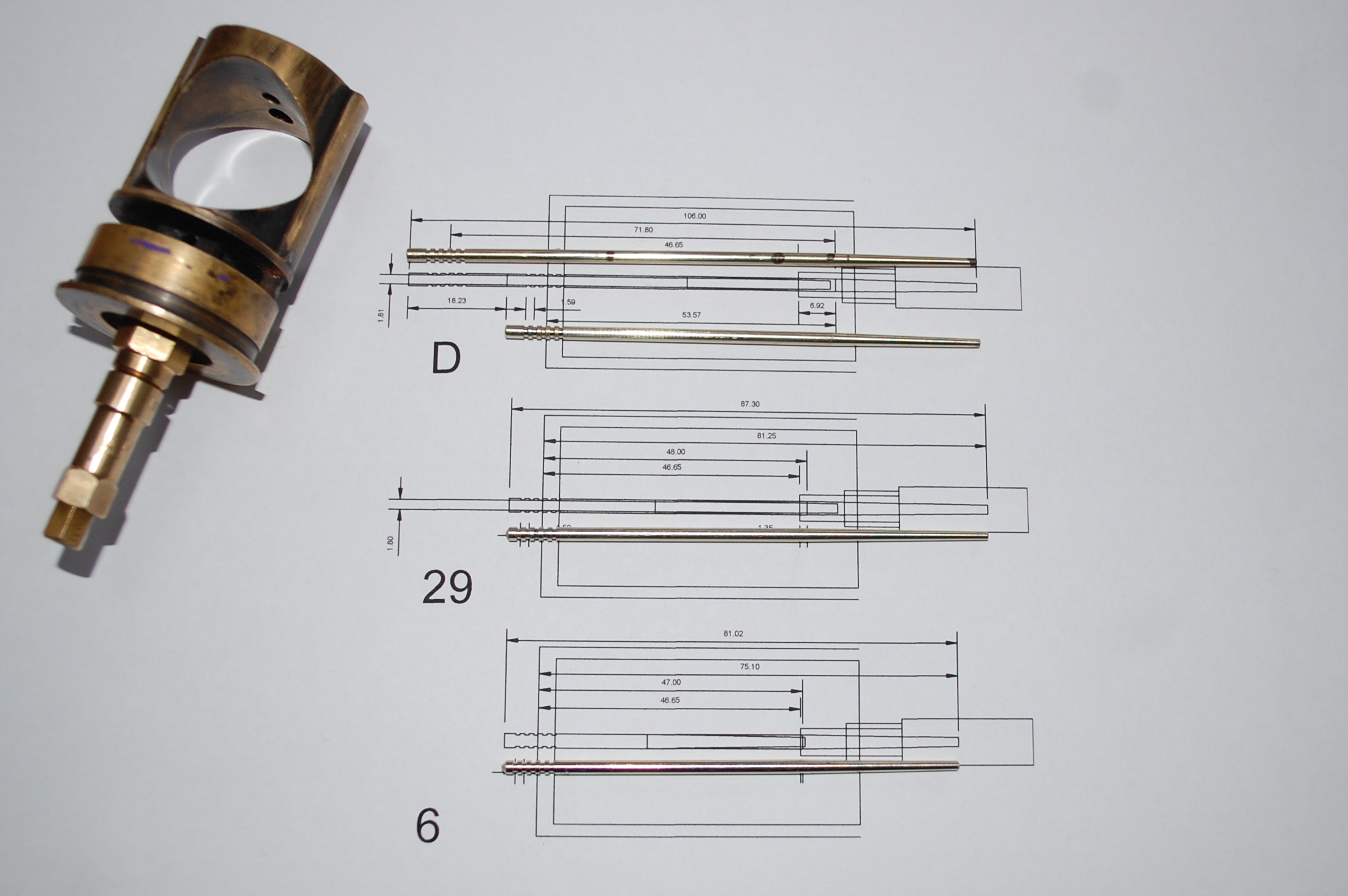
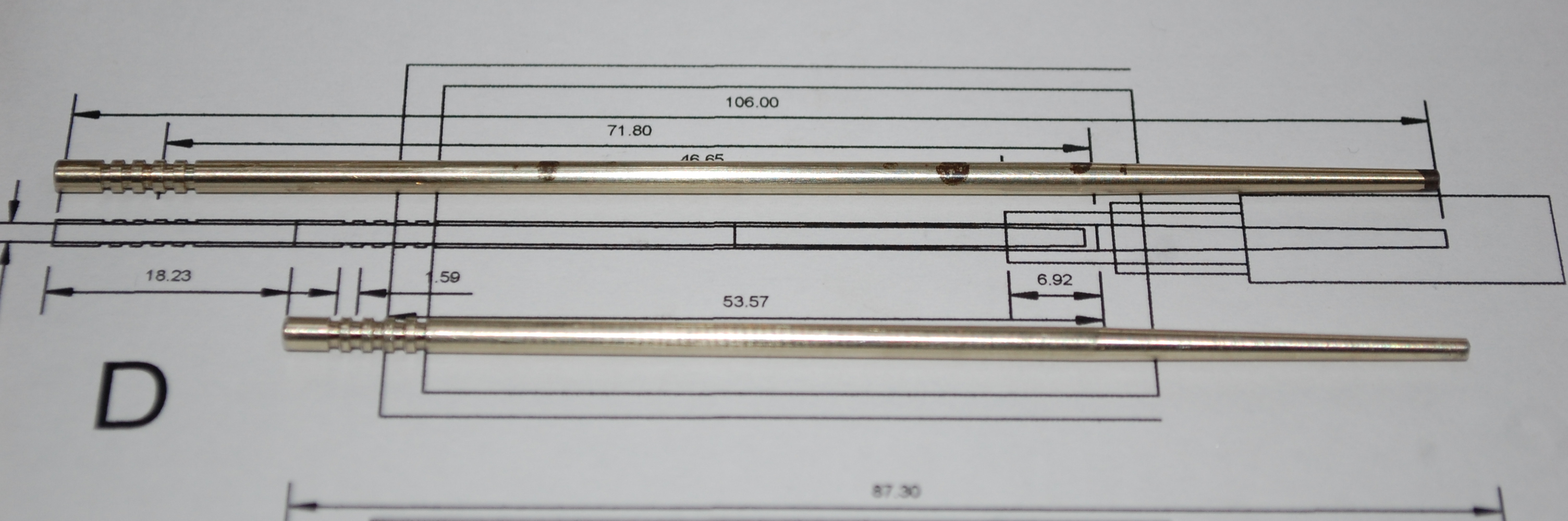
So, a quick study of needles and tapers revealed that fitting an Amal 29 needle in the 3rd clip would mean that the bike would be running on the tapered section of the needle after the throttle was opened only one or two mm which is where the slide cutaway and pilot jet should be in charge of the charge. Unable to Google anything concrete, the best I came up with was that the parallel straight portion of the needle should be down the needle jet until maybe 1/4 throttle after which it should start to richen up on the taper. I found a D needle from a monobloc carb in the dartboard and this seemed to have a very similar taper to that of the 29 but was conveniently much longer. After a few hours with the Emco mini-lathe making up some collets, bushes and super-slim parting tool we produced the shortened needle shown below. The 5 needle clip positions are now adjusted to put the start of taper in what could be the “correct” position.
Will it work? I have no idea.
Amac 10MDY needle jet adapter
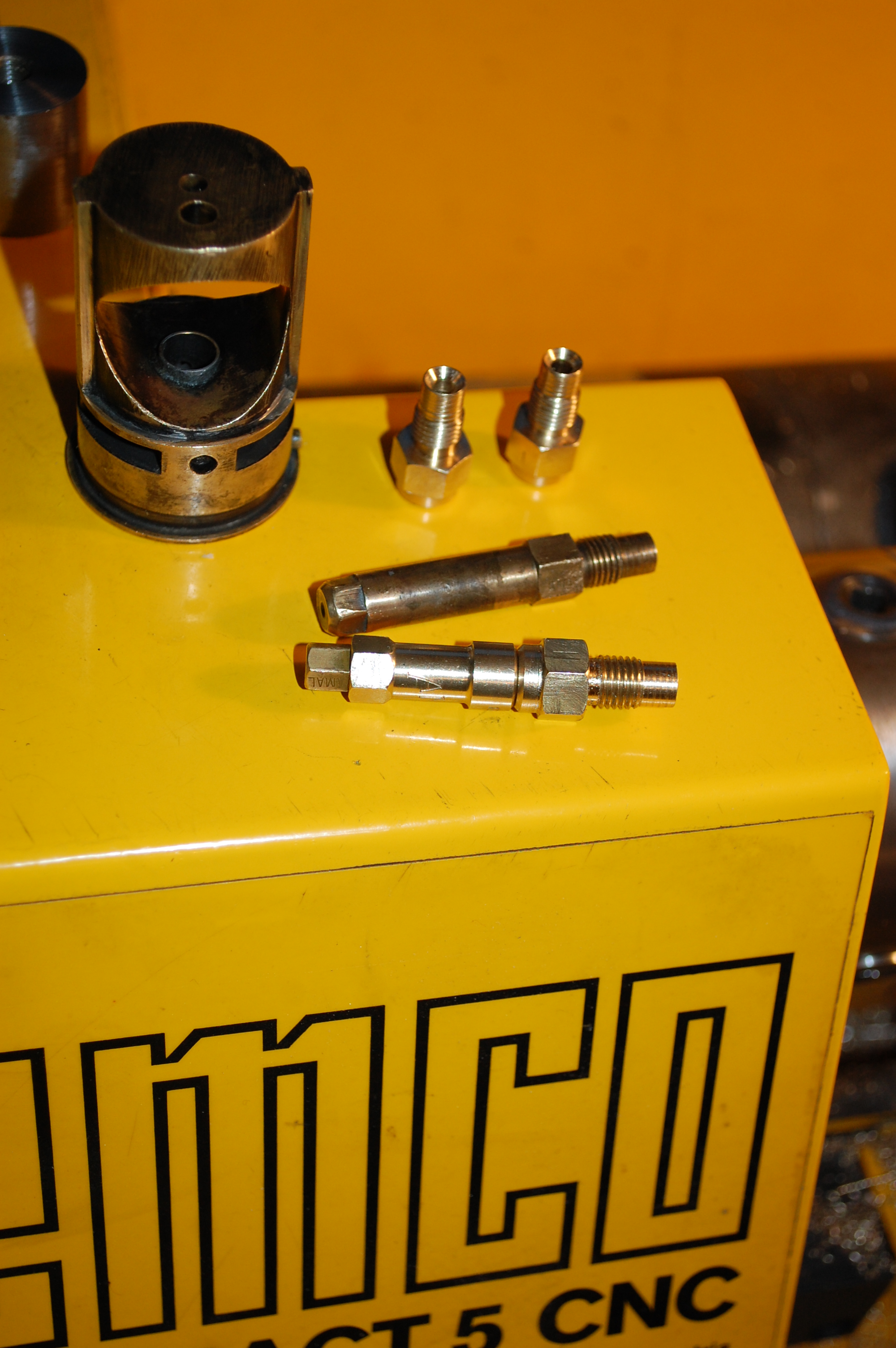
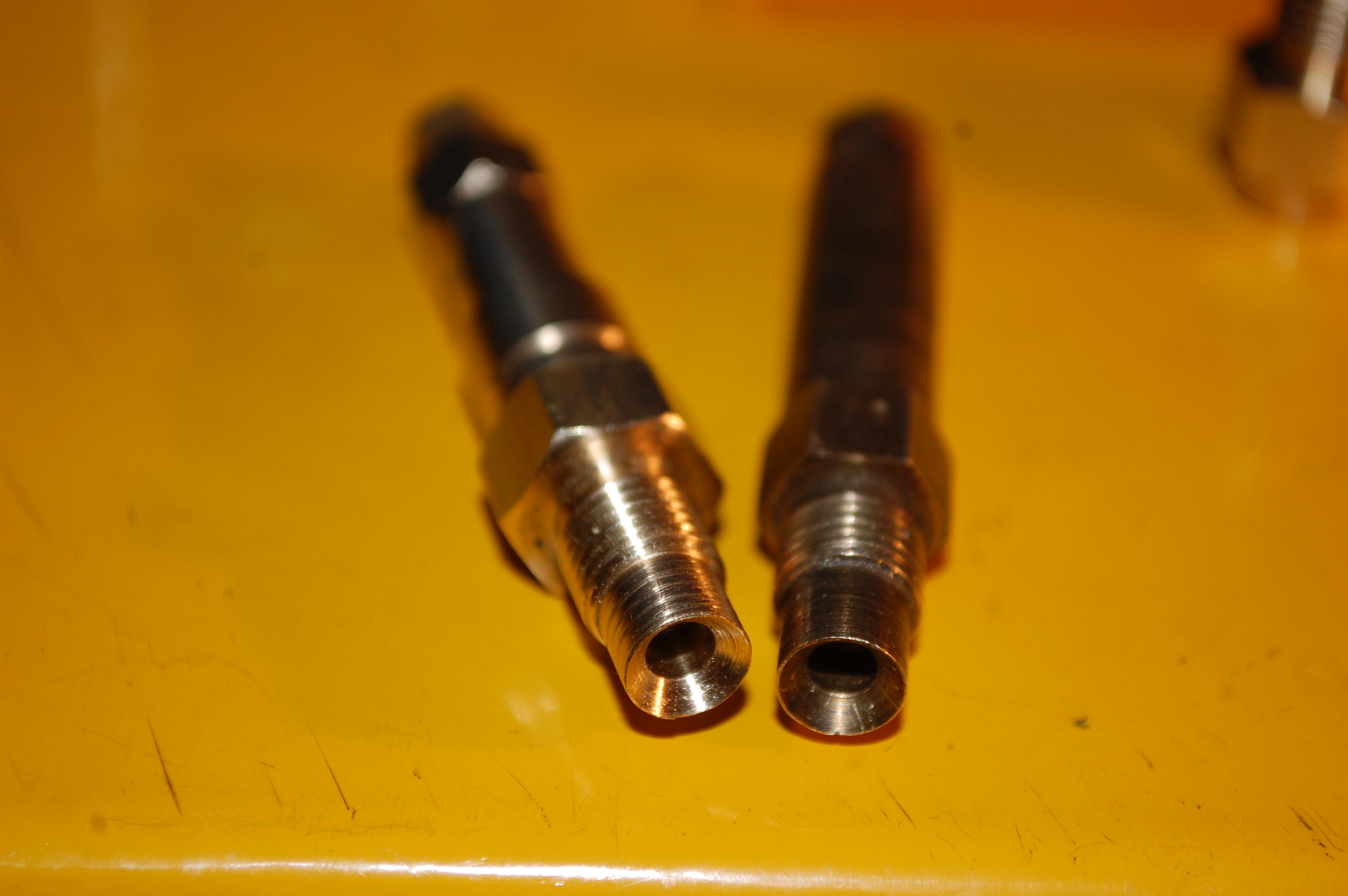
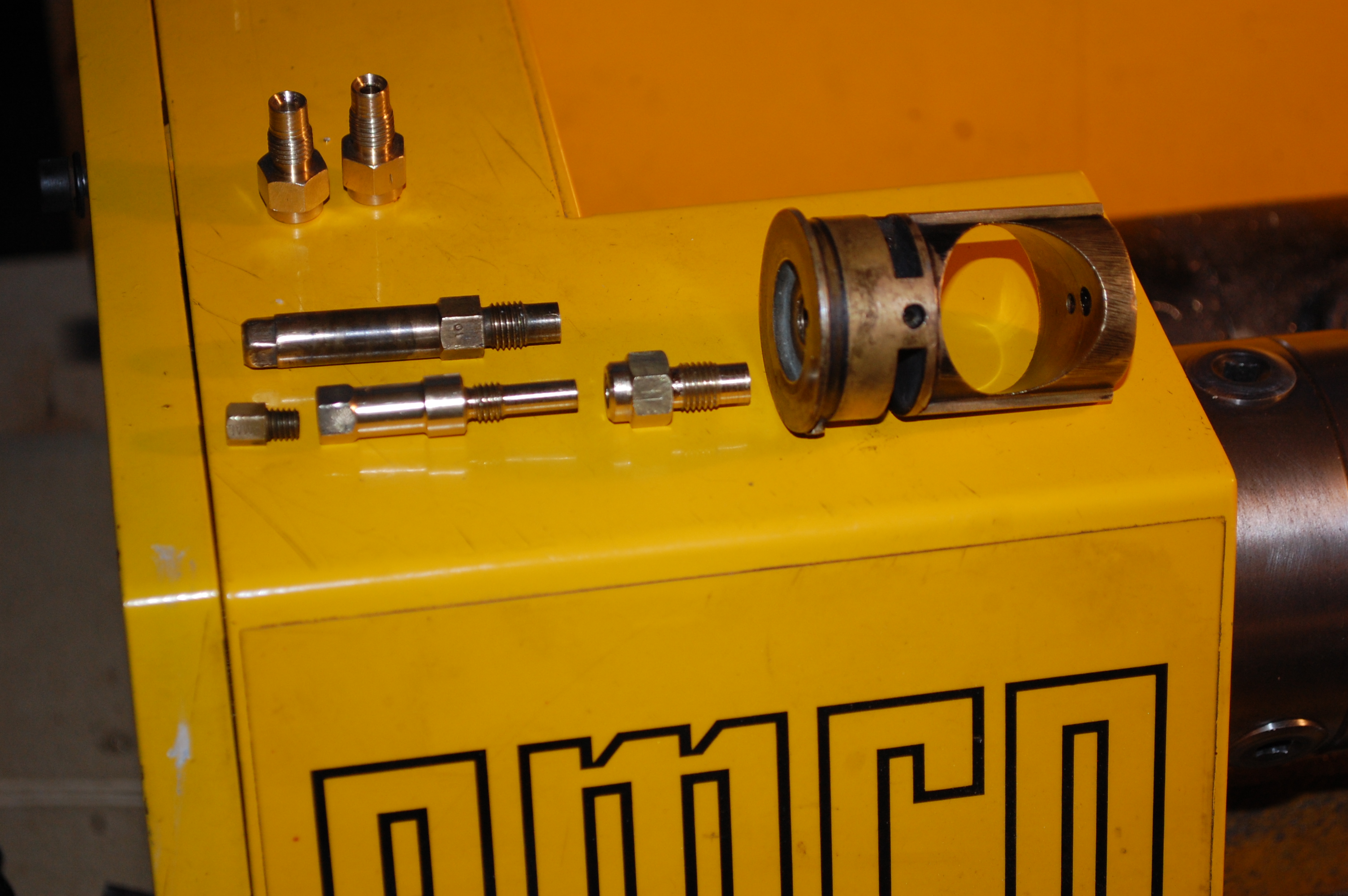
Having recently re-acquired my little Emco Compact 5 CNC lathe I found time over the Xmas holiday period to experiment with a little project that I’ve had in mind for a short while. I had noticed that the ’30 M90 was running rich at running-in speeds and sooting up the plug. Not a major problem, but closer investigation revealed a home-made needle jet in the Amac 10MDY carb.
Although, conveniently, this needle jet was made to accept the later small Amal main jets it was badly worn and the likely cause of rich running low-down. I asked around but was unable to locate any replacement needle jets or needles for that matter. So, following a chat with the ever helpful (and patient) Martin Bratby I decided to look into producing an adapter that would allow 29 series needle jets and needles to be used with the earlier Amac carb.
After a few false starts I came up with a design that could be produce on the little Emco. It was tight as there isn’t much wall-thickness to play with if everything is going to line up correctly but I was pleased with the result. The photo above shows the Amac jet-block with an original needle/main jet assembly next to a 29 needle/main jet screwed into one of the new adapters.
The next job is of course to try one on the bike to see how well it works. The plan is to start off with a 106 needle jet and the middle-clip of a 29 needle. I’ll probably adjust the position of the needle jet up/down in the adapter to fine-tune rather than move the needle clip itself as the “correct” relationship between slide-needle-needle jet is of course difficult to establish when mixing and matching the 29 and 10MDY elements.
To help with this, I have use of a decidedly un-1930s Innovate LM-2 AFR data logger that uses a Bosch car-type Lambda sensor rammed up the exhaust pipe to monitor the exhaust gases. Once lashed up on the bike, it is relatively easy to record the air-fuel-ratio at different throttle openings, engine speed and load. This makes fine-tuning of carburation using the modern fuels a lot less hit-and-miss for someone with my lack of sensitivity in such matters.
Sunbeam Model 9 from the Land of the Rising Sun
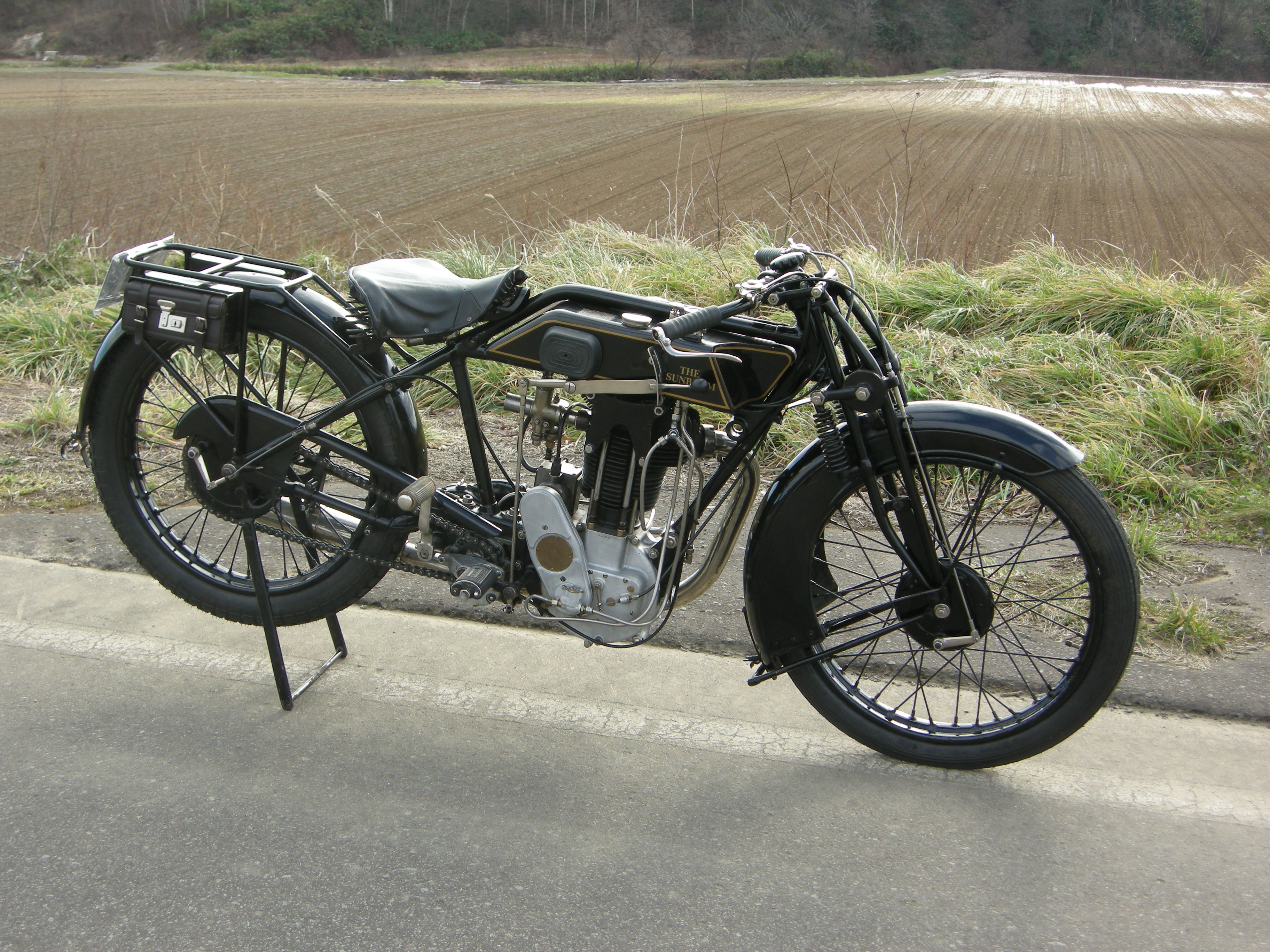
Many thanks to Takeshi Okazaki for getting in touch and sending some photos of his rather splendid and original 1927 Model 9 now being well cared for in Japan, some 6000 miles from its Wolverhampton birthplace.
I’ll let Takeshi give a little bit of the history of the bike that he now uses for long-distance touring…
“I was lucky enough to obtain this 9 two years ago from a famous dealer in Austria who specialized British Vintage Motorcycle. Based on documents accompanied, the 9 was owned previously by Mr. Brian Wise in UK, and detailed observation on the 9 revealed that it had received careful treatment by Mr. Wise with much of love and enthusiasm for the motorcycle. I am so pleased to own this motorcycle, and thus think to pass it to the next owner like Mr. Wise did.”
Spares and information are difficult enough to source here in the UK but the challenges further afield are significant. As Takeshi so succinctly puts it ” “Far East”, which indicates “far from information” in case of my Sunbeam” It’s great to see these bikes appreciated by enthusiasts around the world and I hope we can help with information and useful contacts.
Takeshi also has a friend with a 1931 Model 9 and hairpin spring head and I hope we can see some photos of this bike in the future. In the meantime perhaps it could be time for the Marston Sunbeam Club to start a new far-east section?
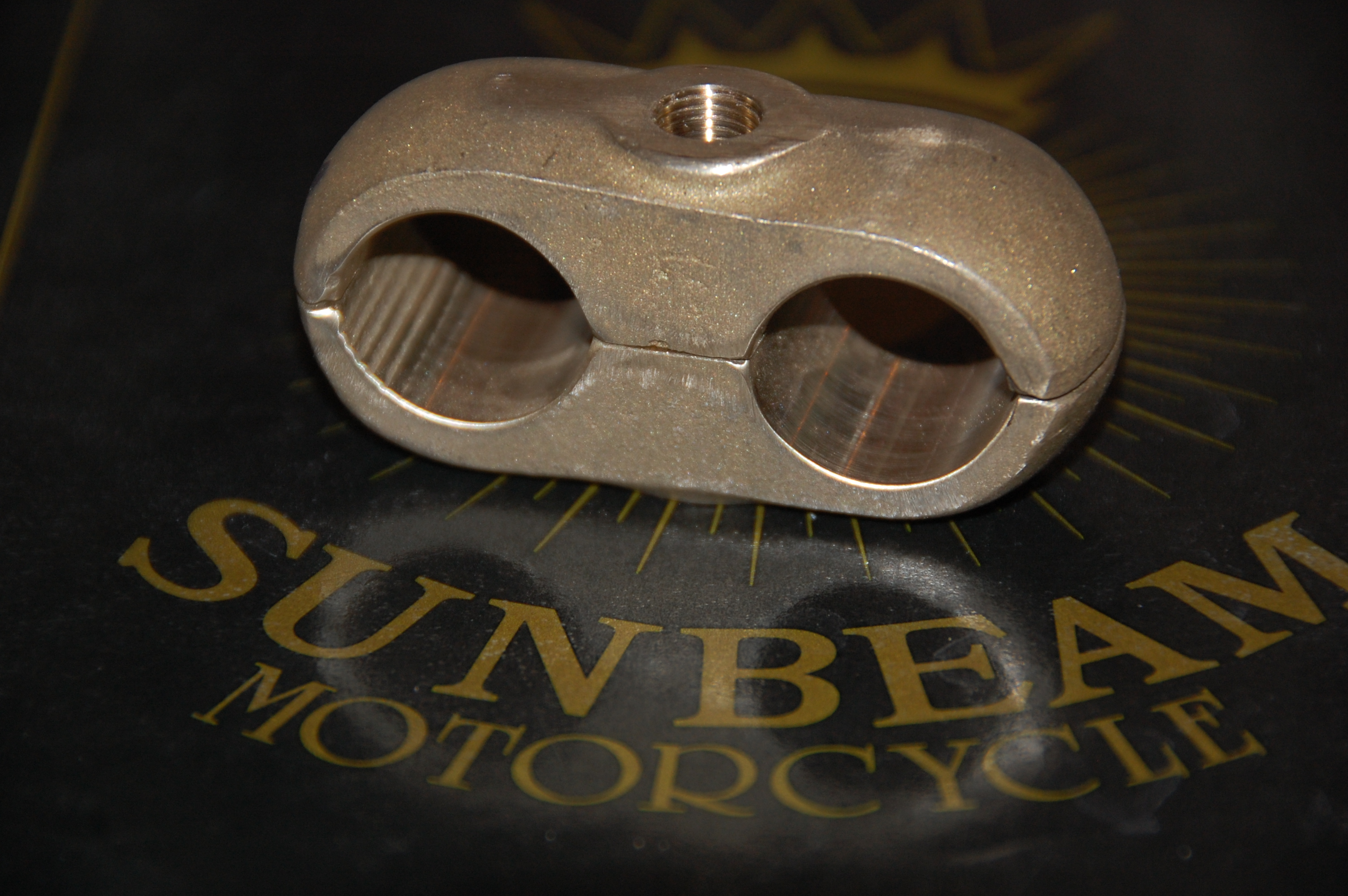
Druid fork handlebar clamps
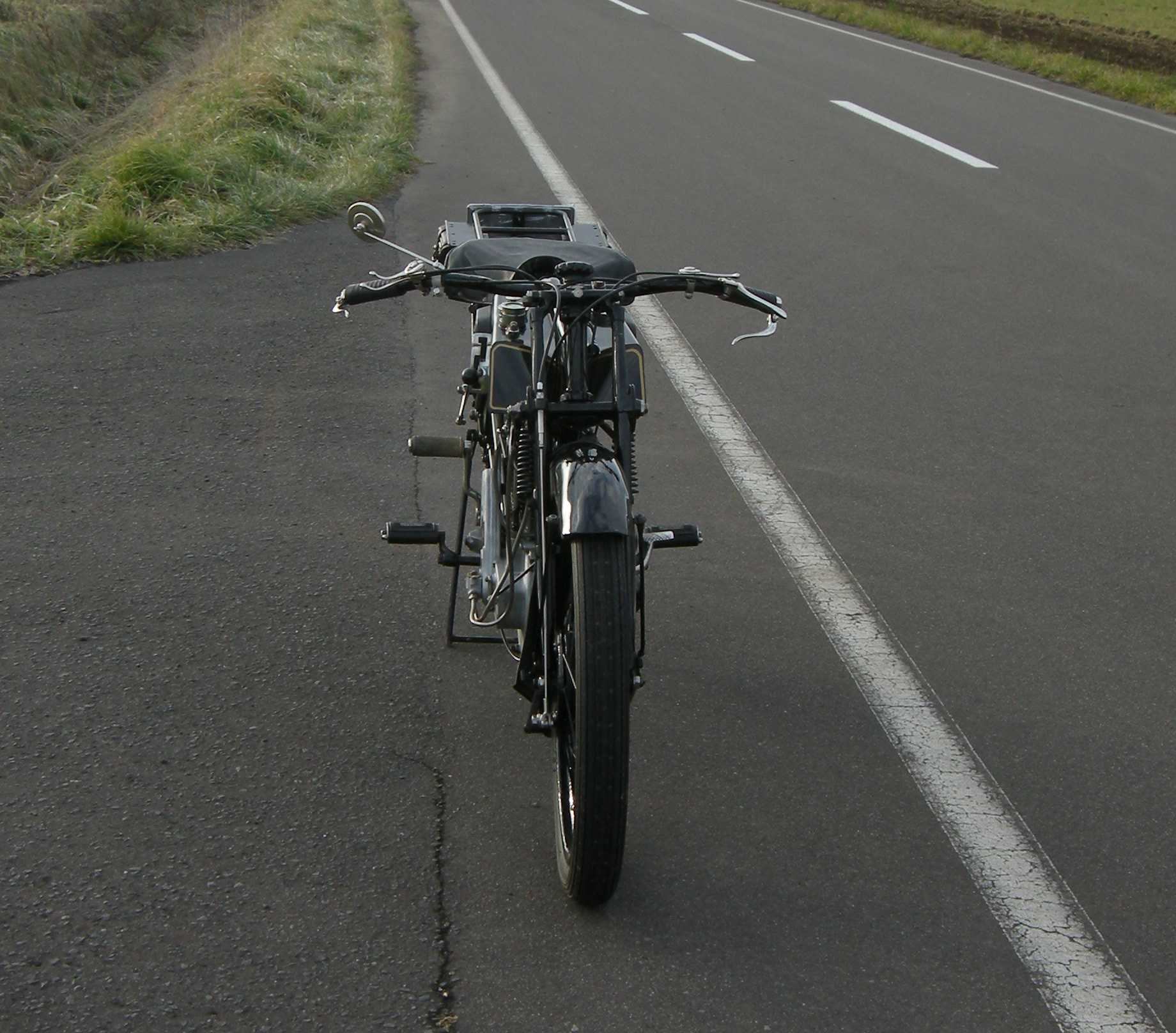
I was short of a set of handlebar clamps for the ’28 bull nose Model 90 that we are working on and so had a few sets cast and machined-up using an original Marston clamp from the ’30 bike as a pattern. They came out quite nicely in high-tensile brass and will be serving in place of decorations over the Christmas period.
I had a few extra sets produced and will put them on the shop in due course in case anyone out there is also in need of a set.
Sunbeams at the National Motorcycle Museum
Many thanks to Rob from Racing Lines Derby for a grand day out at the TT riders Association luncheon yesterday. This annual celebration of TT riders past and present was held at the National Motorcycle Museum. Whilst Nick Jeffries acted as MC, we shared a table with the legendary and apposite John Cooper. Others present included 5-times in a week TT winner Ian Hutchinson and Triumph factory rider Percy Tait. Publisher and TT rider Malcolm Wheeler rode into dinner on a Ducati to take over presidency of the association.
Beforehand, we squeaked a couple of hours to check-out one or two of the many wonderful exhibits.
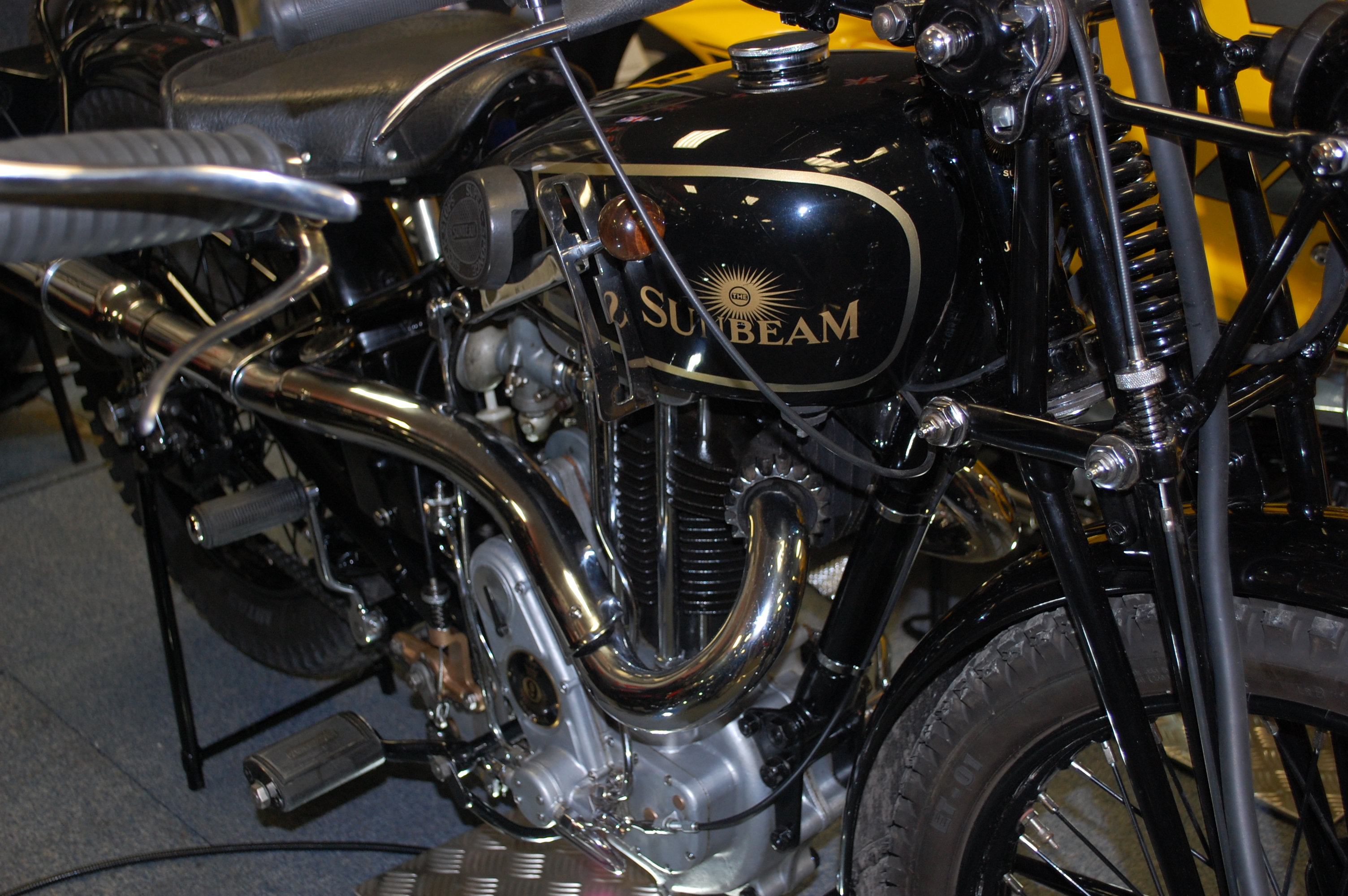
It is of course impossible to do justice to such a collection so I didn’t bother. Instead, I took a lot of photos of the Sunbeams on display which included a number that were restored by our good friend Peter Woodward. These included a Model 80, Model 9 and two Model 90s and they can be seen in the gallery together with many other detail shots.
Debates about provenance may continue in certain circles but the 1925 Sunbeam Sprint must be one of the most beautiful bikes in the museum.
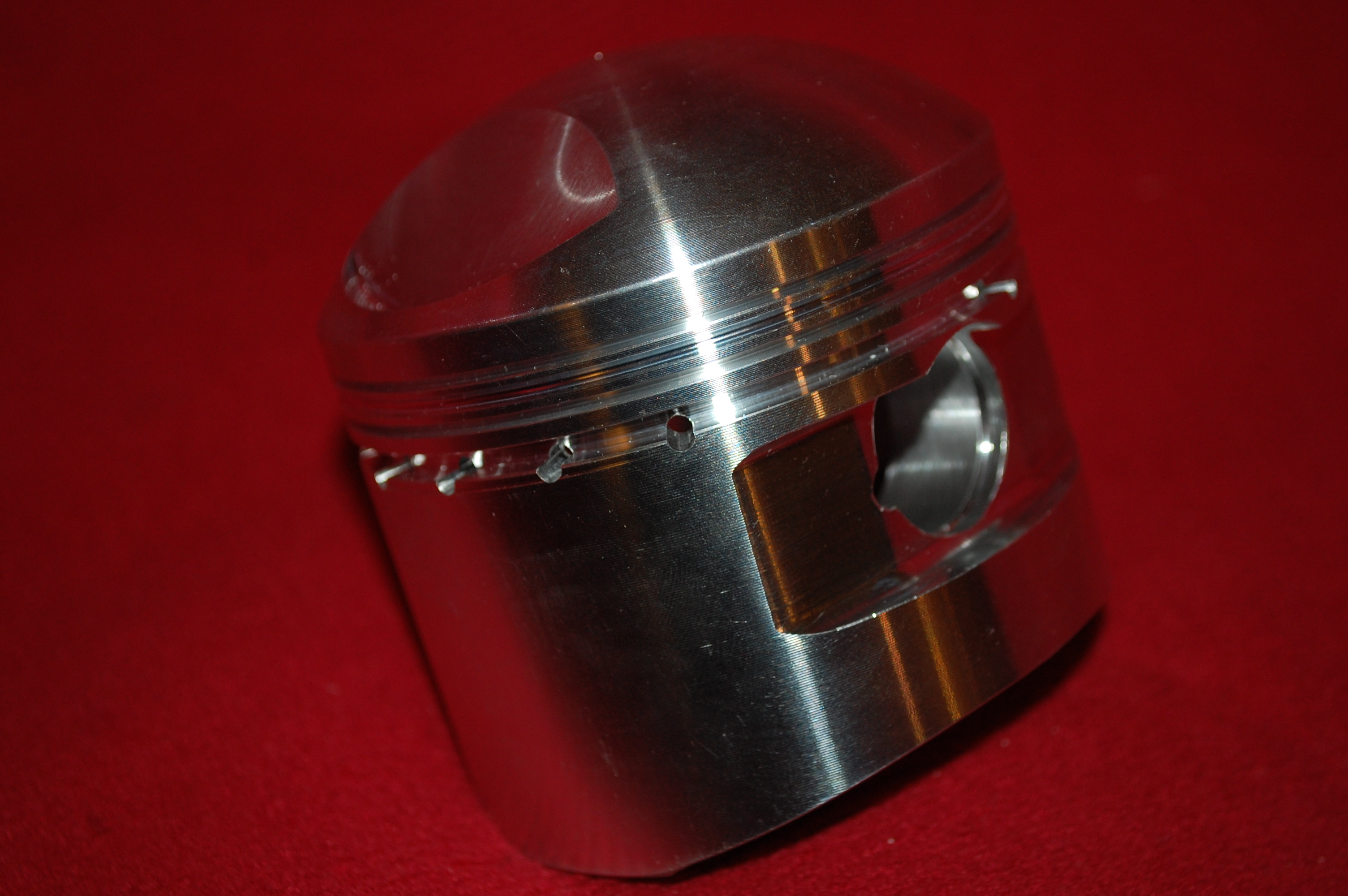
Pistons now available from Sunbeamland shop
I’m pleased to say that we now have the recently manufactured high-quality, lightweight forged 7.5:1 pistons available on the Sunbeamland Shop in +0.020″ and +0.040″ oversizes. Modern materials and CNC machining mean that all-up weight is within a few grammes of the original Marston’s item and I’m enjoying the experience of running one in on my own 1930 Model 90. They should fit any of the late 20’s early 30’s 500cc OHV bikes and we hope to be following up with production of a small batch of 6.5:1 pistons aimed more at the Model 9.
Revill’s of Hathersage
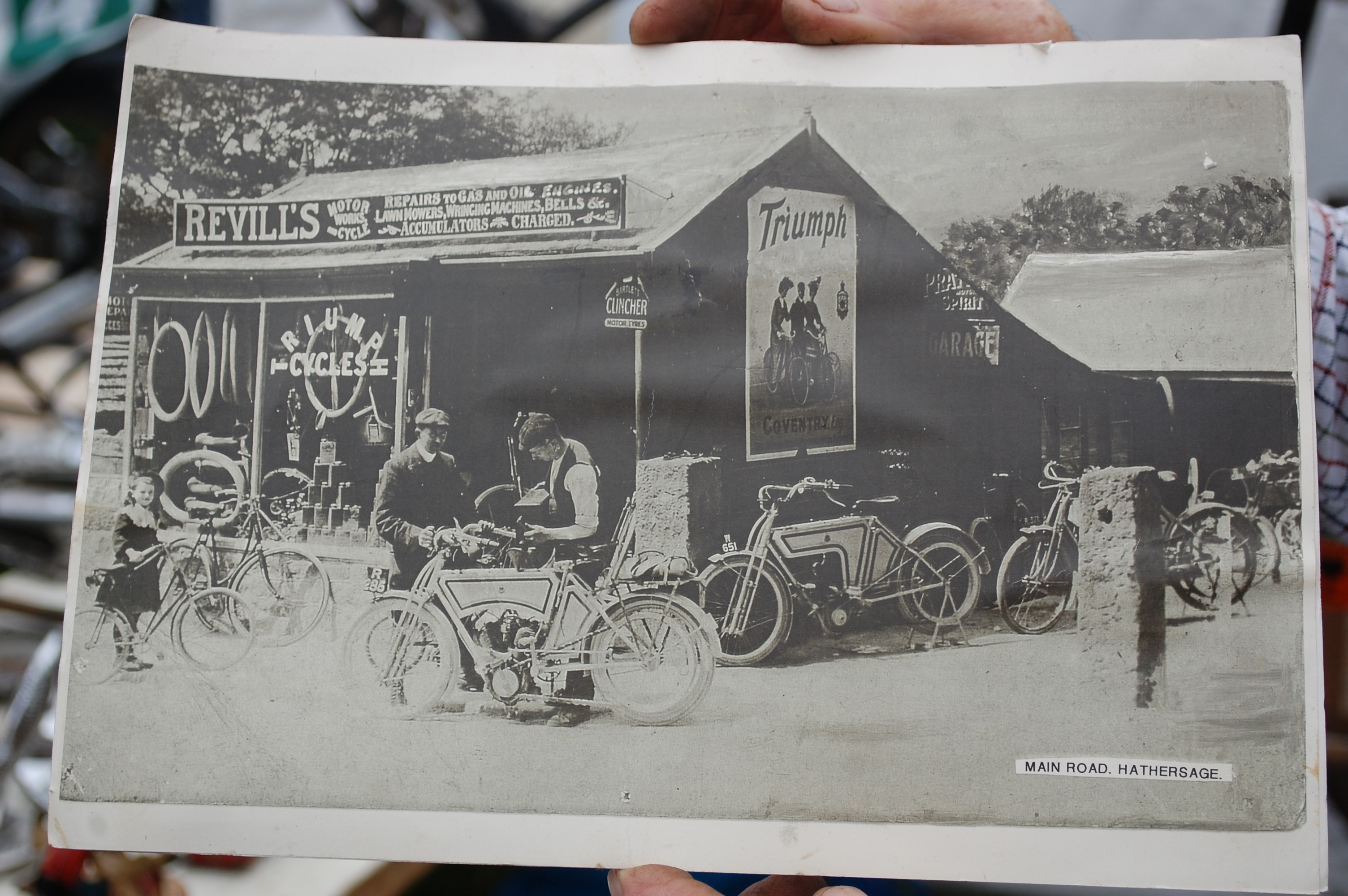
I just had to post this lovely old photo that Richard Jones showed me at the autumn Stafford Show. Anyone here remember Revill’s of Main Road, Hathersage?
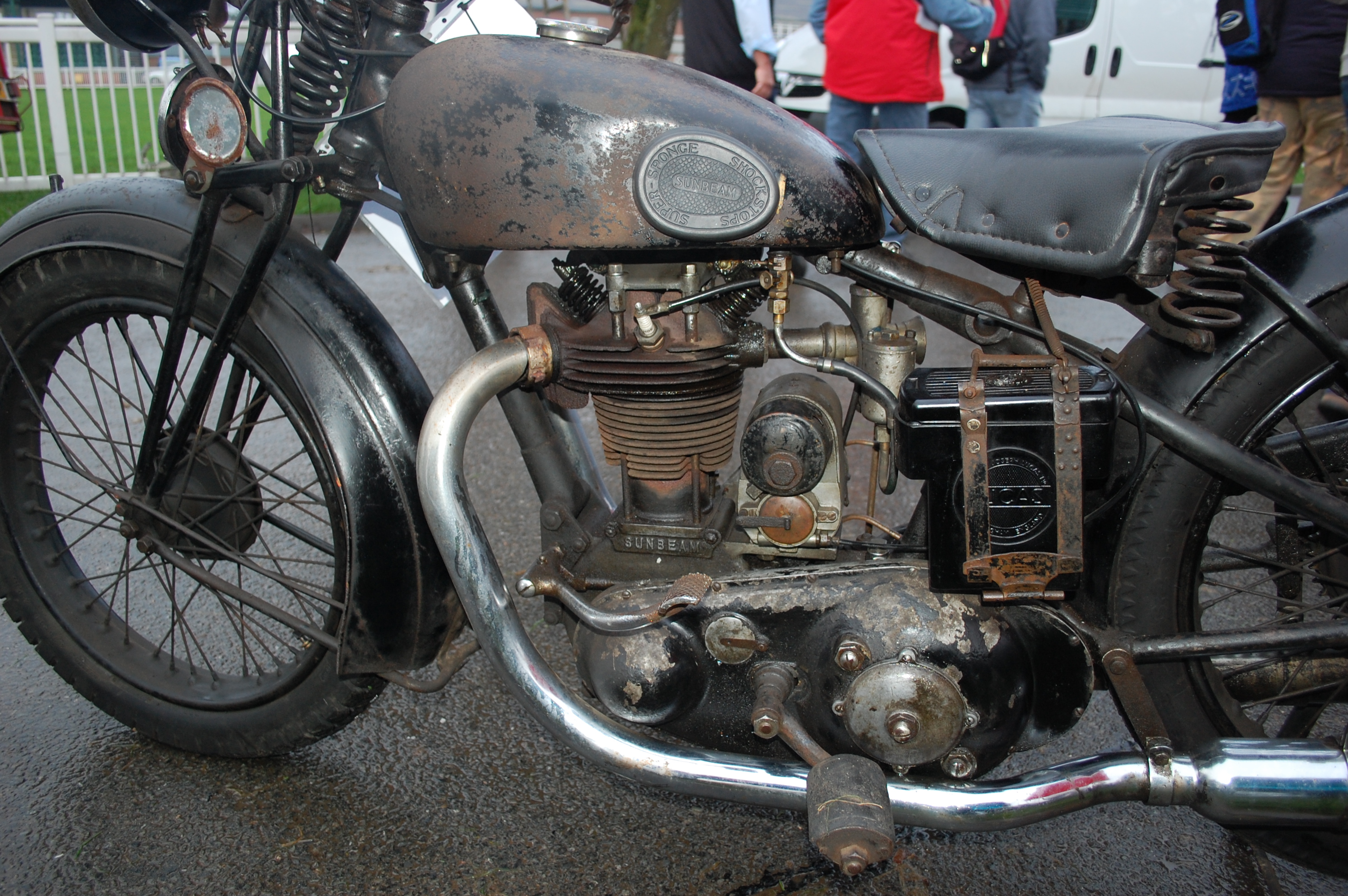
I wonder how much business was brought in by “wringing machine” repairs? Later wandering around the show I spotted this 1935 Sunbeam 350 twin-port was up for grabs amongst the auto-jumblers paradise.
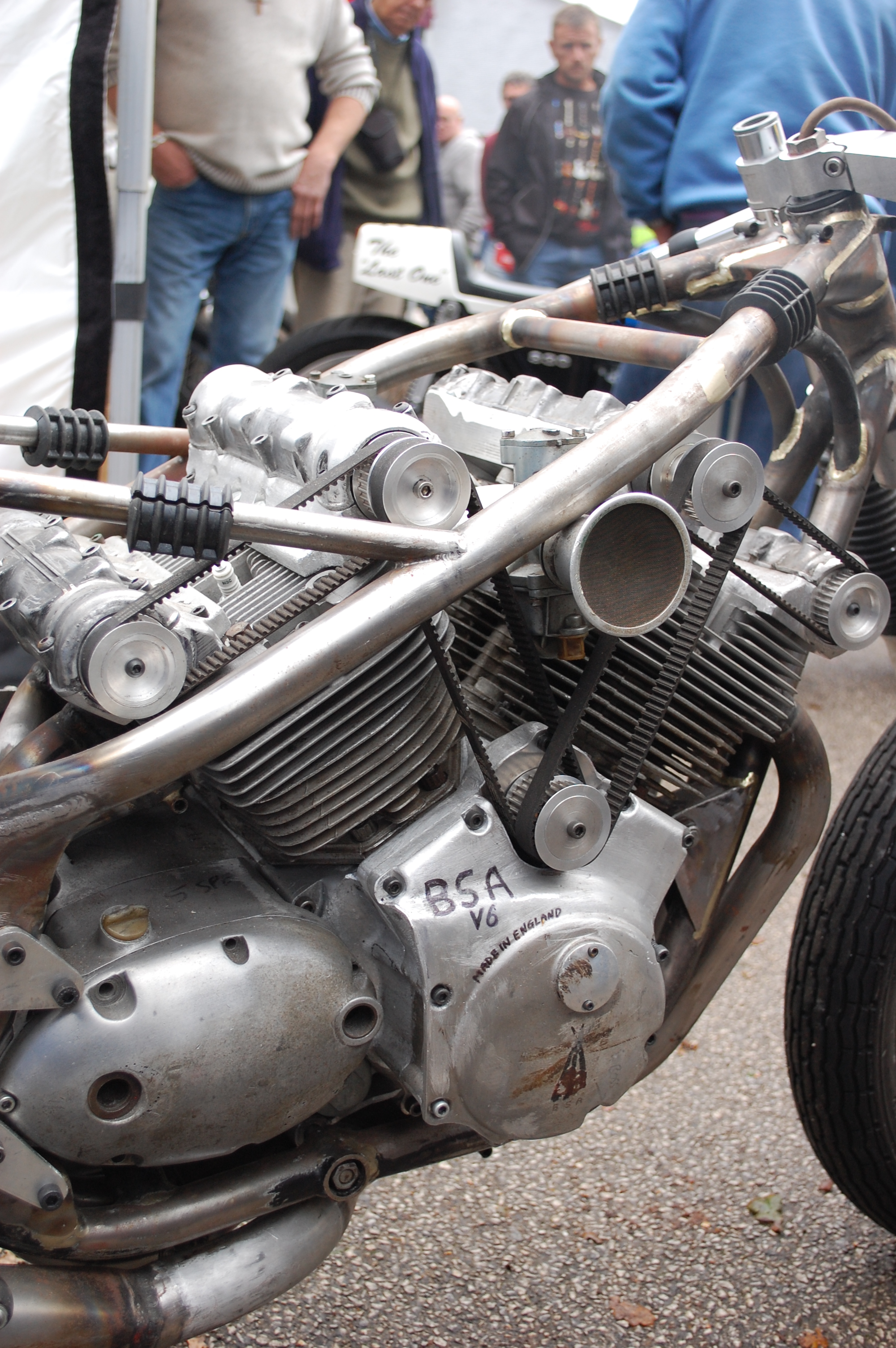
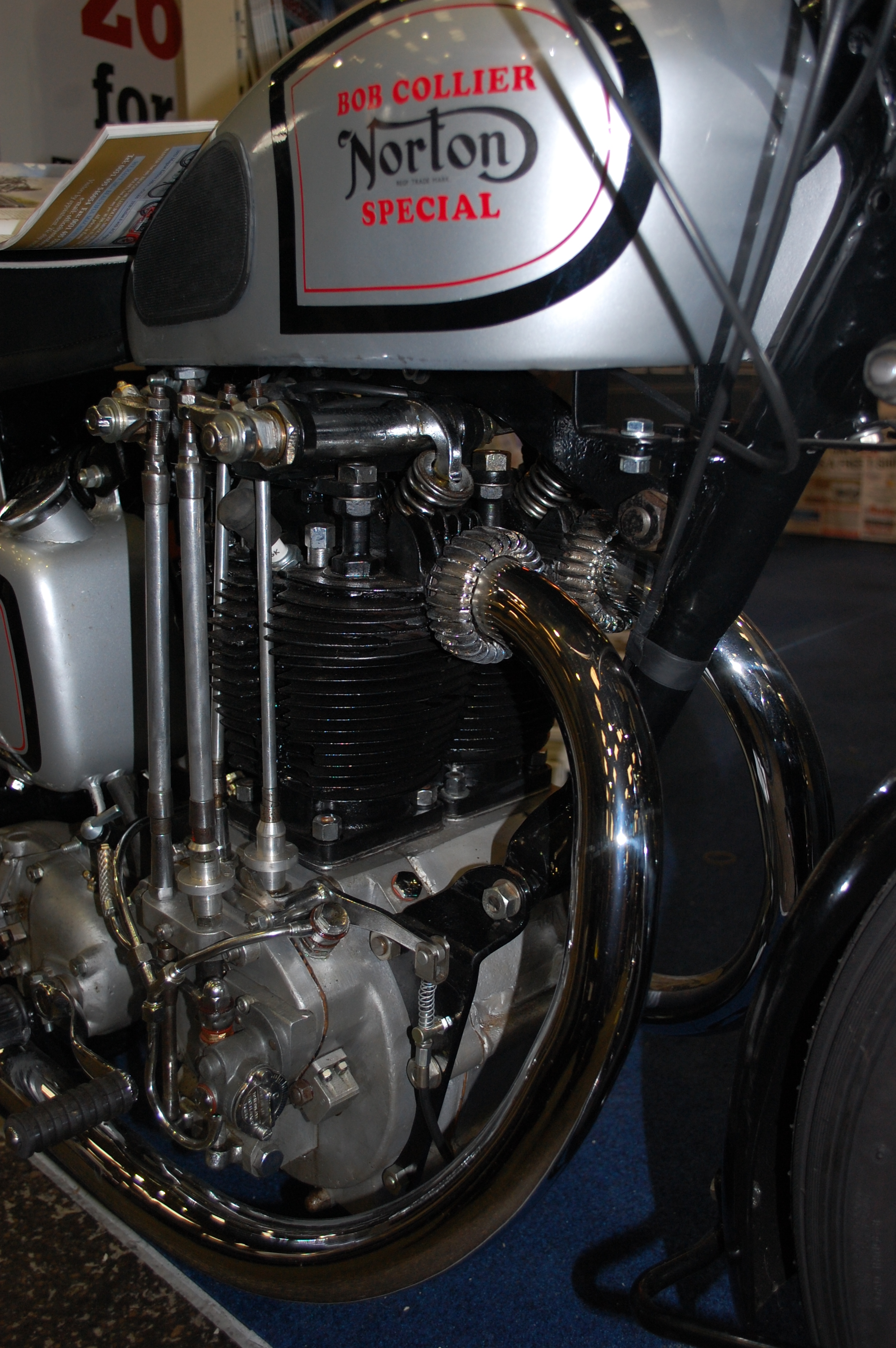
It’s the same kind of ingenuity and inspiration that put men on the moon that gave rise to these next two creations.
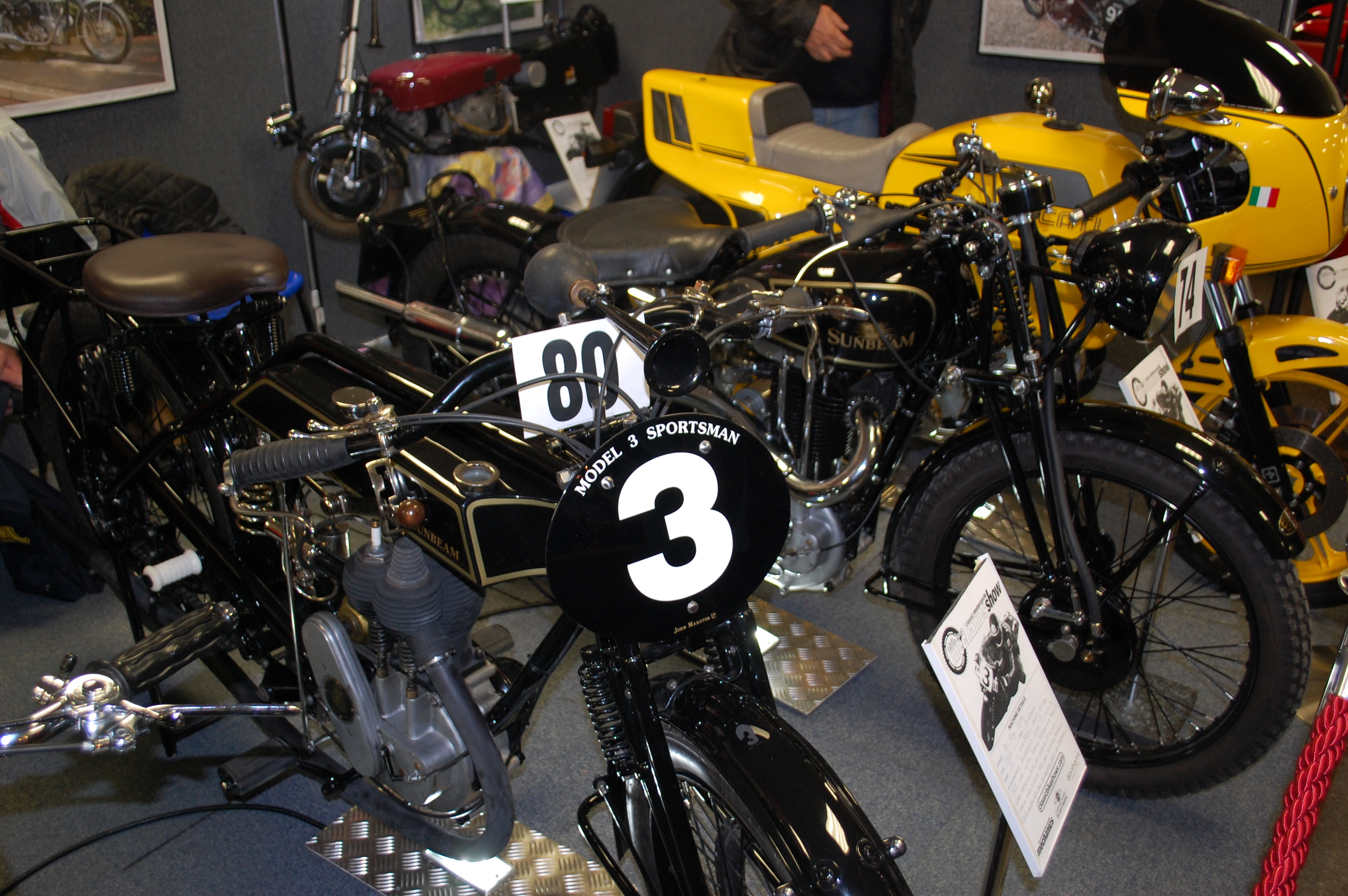
And of course John Phizacklea made sure of a couple of stunning Sunbeams on the Wilts club stand. The recently finished Model 3 sits well alongside John’s own trials spec. Model 9.
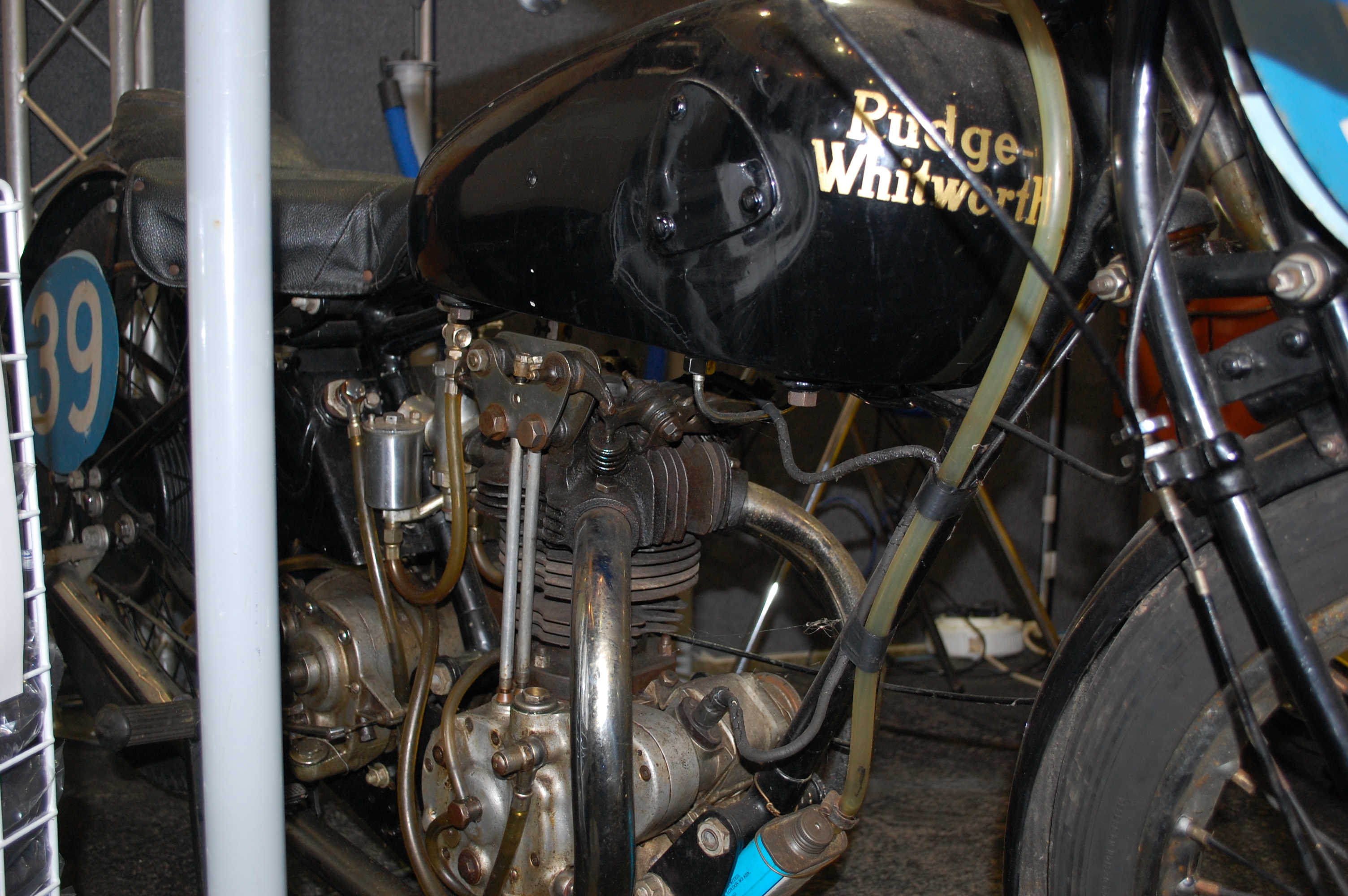
One of the best machines at the show to my eye was this beautiful Rudge TT replica, tucked away in the corner of the VMCC stand. As far as I could tell it looks to be in a fantastic “as raced” condition complete with twin-floats, twin-fillers and cable operated damper. Just awesome.
And finally, there were of course some two-smokes too…. One of my favourites was this beautifully prepared, late model RS250 Honda. Nice touches include the radial front brakes fitted to the custom-made fork bottoms. The equally gorgeous Joey Dunlop that features the single-sided swinger of the earlier model bikes can just be seen.