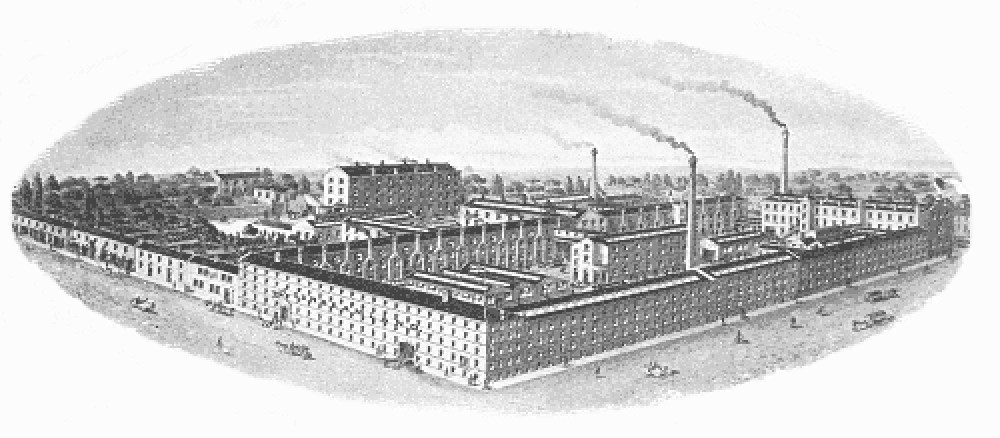
Archie’s stories of Tom Ainscough working at Cadbury’s after the war

TOM AT CADBURYS

When the piano business went unprofitable Tom took a job at the local Cadbury factory, at first being a “brusher up”.

His first place was at the top floor of the sugar warehouse working a dinner hour spell cleaning up the floor where the sacks of sugar were emptied down a chute. The sacks were stowed up to almost ceiling level and the stackers were considerate to leave a space in the middle for Tom to crawl up to and have a snooze when he had finished.

Once, to his consternation, he heard footsteps on the empty stairs and the head security man (ex policeman) appeared and carefully inspected the floor, even looking down the two sets of stairs. Tom held his breath. Having done a thorough search, the man went over to the sugar chute, furtively produced a bag from his jacket and filled it with sugar, hid it under his coat and left.

Tom was working the weekend in the basement cleaning up round the new sugar grinder that had come from Bourneville and was to be “ceremonially unveiled” on the Monday.

In due course a gathering of the supervisors clustered round it and the most senior switched on and pushed the start button. Beyond a click, the machine stood motionless.

The electrician fitter was sent for and duly tested things and pronounced it “not electrical”. Then the fitter and his boss were summoned. They said it must be electrical. By this time the audience had drifted away. Finally the boss fitter said to the fitter, “Take the main drive case off and we will have a look.”

When it was removed it disclosed that there was no chain between the motor and the machine.

“You didn’t fit the bloody chain on,” he said.

“I did,” said the fitter. “You couldn’t. I did.”

A new chain was fitted and the thing worked.

Tom said nothing. A new chain was snugly running in the Sunbeam sidecar outfit’s rear chain case.

Tom had a 1934 600cc Model 9A Sunbeam outfit with a box sidecar, and bought various scrap items from work. One was a steel table with tubular legs, about six foot square, but it was really too big to fit in the sidecar. Eventually he got it on, but it shut off all left vision and the legs stuck out over the bike.

Coming up to the roundabout Tom saw the local cop standing there gazing at the outfit and his heart sank and he prepared to stop.

The cop waved him on and as he passed said, “Oh, it’s you. I thought it was a combine harvester.”

Archie and The Salamader

The Salamander

When I was working on contractors’ plant repair in an open-fronted ex-WD corrugated iron building (you can still see them in abandoned RAF stations), the sole form of heating that we had was a salamander stove. This had a circular saucer-shaped base with a top carrying the chimney that was provided with a vertical pipe that re-circulated hot gas down to the vessel to vaporise the liquid fuel held inside. This should have been heating oil (like diesel), but being “skint” we used old sump oil from the repair jobs.

To start it off, you got a petrol-soaked rag, poked it into the filler hole and put a match to it, smartly stepping back, for often it would blow back before you could shut the hatch of the filler orifice. The downside to the economy fuel was that, at the end of the day, we had black faces and resembled artists from a “****** minstrel show”.

One problem with using sump oil was that inevitably it contained a residue of water under the oil. This got heated to boiling point as the day went on, and you could hear it bubbling up like a chip shop till eventually it would spew a black foaming tide from the filler hole, flaming as it emerged. I had a long rod hooked at one end and a handle at the other to drag the heater outside and let it burn out. It was quite spectacular and even attracted the attention of a policewoman who asked if we needed the fire brigade. It was hot enough to burn the hair on the back of my hand even with a six-foot-long rod.

I remember one night John and I were working late repairing a dumper truck that the customer needed next day, and it was after midnight. It was bitterly cold with frost on the ground. We heard the boiling-up noise and ignored it till the flaming tide shot out. I tried to get some sand or earth to dam the flood, but it was difficult due to the frost. Luckily John had bought a cheap fire extinguisher from the supermarket, so I grabbed it but had no idea how to operate it, so handed it to John with the remark, “You bought it, so must know how to work it.” He turned it upside down and pressed the button, whereupon the gas inside shot out uselessly. So, being a very strong type, he tore it in half and sprinkled the powder on the flames and put it out.

At weekends I would go home for my Sunday dinner, but John would have fish and chips from the nearby shop together with a lad who came in as a help. We brewed up with an aluminium kettle and teapot that we used when going sidecar racing, John being my passenger. The kettle warmed up by residing on the salamander, then received its final boil by using the oxy-acetylene burner. This had two controls: the flame that heated the metal to melting point, and a trigger just under your thumb that, when pressed, blew the metal away. Ronnie, the lad, in boiling the kettle inadvertently pressed the trigger and blew a hole in the kettle, and John “played hell with him”. Calming things down, I said to John, “He is only a dozy lad and it was easily done, so use my teapot,” and departed. I duly arrived back after dinner and John said, “Do you think I was over the top in telling off Ronnie?” “Well, it is easily done and he has not used the burner before. It’s not the end of the world.” “Good,” he replied, “for I have blown a hole in your teapot.”

When a fire extinguisher salesman came into the yard, we bought one. He said things were not so bad up here compared to his previous territory down in Cornwall. Trying to sell to farmers was well near impossible. He visited one farm where the ancient man viewed him with great suspicion. When asked if he would like a demonstration, he said, “I will ask my father,” who duly tottered out from the building. After giving the “spiel”, I gathered some old straw up from the ground and, sprinkling some petrol on it, set a match to it. It was a bit more than I had bargained for, and the farmer said, “You’d better do summat about that.”
Operating the extinguisher, I put it out very quickly. “There you are,” I said. “Will you buy one?” “No,” he replied. “T’aint natural.