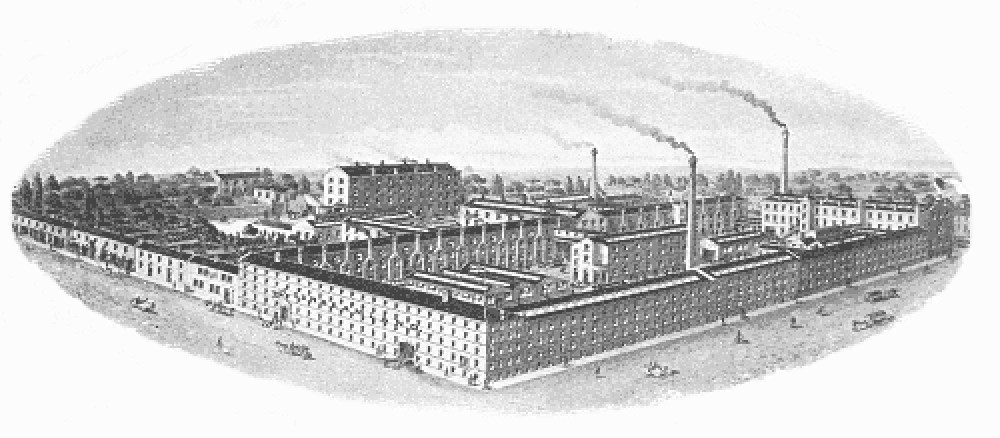
Tom was serving his time as a dental mechanic in Wigan when the firm he was employed by went into liquidation. The family, Tom, brother Jack and his father Walter moved to Moreton, a place known as bucket town due to its sanitary arrangements, otherwise debtors retreat.
Tom and Jack decided to go into the haulage business, the time was in the early twenties and Foden Steamers were the obvious choice. In the climate of these days no haulier could make a decent living unless his wagon carried twice its rated load and the petroI types had a pathetic performance by comparison.
As steamer driving needed a fair amount of skill Tom went as second man for a local haulier Billy Bantoft – a very rough diamond.
They were driving for a local firm at the time and when in a town in Lancashire, heading home in late evening as the wagon approached the city centre there was a sharp crack from the back end and the wagon stepped dead. To their dismay the back axle had broken in half (not unusual in the double load days)
The wagon was blocking both tram tracks leading to chaos, tramcars queued either side, and all traffic blocked and a crowd gathered round to improve the situation. Bantoft assured the tramway men— it’s all under control, don’t worry it will soon be sorted and raked the fire out and filled the boiler, this being vital as the fusible plug that should protect the boiler against explosion no longer had its lead core – just a big nut and belt, (normal for the time).
“Has’t gotten ow’t of thy own on t’ wagon Tom?”
“Only my coat”
“Get it, come on” and walked away from the crowd.
‘What are we going to do?’ said Tom.
“Find the nearest railway station!” was the reply.
“That firm was no good to work for anyway – let someone else sort out the mess”
On one occasion when deep in Wales they were desperately short of water. It was a source of great annoyance to the farmers to have wagons fill up at roadside ponds reserved for cattle and when Bantoft spotted a pond it was a case of being saved from disaster as the fusible plug had been bolted solid. As he unrolled the suction hose one of the men who had been working at the ether side the field approached saying,
“Don’t you put that bloody hose in the pond, if you do I will cut it off with this sickle”
“You cut that hose and you will go in the pond yourself”
and as the hose was sliced Bantoft (a big man) seized him and flung him into the water. He scrambled out and made his way to the wagon muttering curses in Welsh and noted the owner’s details, as he squelched away the other farm worker who had been at the far side of the field approached saying,
“You’ve done it now, yes, you’ve done it proper – he’s the local Justice of The Peace.”
The wagons required both coal and water and small wood for lighting up at six o’clock in the morning and it was no coincidence to find any loose fence boards and even small gates had gone missing in the early hours of the morning.
Water on your route was of great concern as most of the small haulage drivers had dropped the fusible plug due to being on a steep hill and the replacement by nut and bolt gave no protection from boiler explosions.
There was considerable animosity against the steamers owing to their need to fill up from village ponds, horse troughs and wayside ponds.
The large fleet owners were in a better position being able to afford to use the water boxes provided by the water boards but this cost both a water licence, the special key to open the box, and the corrugated tally that enabled you to turn the water on.
Small wonder there was a thriving black market in keys and tallies by drivers employed by the the big firms, and also if a legitimate driver was filling up, he would be likely to be joined by a queue of other wagons intent on cashing in a cheap fill up for a packet of fags.
On one occasion Tom was almost out of water late at night and banking on getting a fill up from a fairly remote box and was heartened to see a red tail light – a wagon was at the box.
“Don’t go yet” he shouted to the driver, who replied
“Have you get a key?”
“No, haven’t you got one?”
Neither had a key and the other driver shrugged his shoulders and said well we’ve got to get water and took a big chain from his wagon, looped it round the box snatched open his regulator and there was a rending of metal, water gushing everywhere and he said “we’ve plenty” now and promptly filled up
Tom was asked by a pair of a couple of young chap to give them some tips on driving their newly bought Foden, the first trip was to pick up a load of coal from near Wrexham and all went well ‘til Tom said
“now stop and put low gear in, we’re coming to Marfords Hill” a steep downgrade.
“Oh we’ll be 0k, the brakes will hold”
a foolishly optimistic statement. It is not possible to change gear when in motion on these wagons and the wagon sped down the hill, brakes doing nothing to slow the speed and a hairpin bend approaching, the engine which had no cover on sped into a blur, “run into the bank” shouted Tom, whereupon the steersman wound the wheel frantically sending the wagon careering to the driver’s side, the driver seeing the stonewall coming up grabbed the wheel and both wrestled to send it to the other’s side.
Luckily, they stopped dead as the engine locked up solid the big ends and eccentric straps red hot, three out of the four bent like a letter ‘S’.
They scotched the wagon and Tom took off the straps and told the lads to take them down to the bottom of the hill where there was a blacksmiths shop and get them straightened while he tidied up the big ends with a file.
Time went on and Tom went down see what the holdup was, and found them sat down on a box swigging tea. “Where’s the straps?” they pointed to the fire and upon taking one out of the fire found it burnt in half. As one had survived the smith managed to weld metal in and copy the good one. Upon assembly the engine ran in lumps” but got them home.
A good job for a change was when a brewery wagon broke down 40 miles away the driver being unable to fix it. The trouble was simple but it took a week to get it home as it was necessary to call at the brewery each morning for spares and a crate of ale and travel the wagon back in easy stages.
Unfortunately, I do not know the outcome of this incident but Bantoft no doubt would not be perturbed by a spell inside or a fine he would never pay.
A soon as he was proficient Tom and Jack bought a Foden from a Birkenhead scrapyard, a well-worn ancient one registration M2632 about 1912? it had solid tyres and wheels running on brass bushes which occasionally came part way off and were replaced by running against the kerb. When Tom steamed it home he noticed the complete absence of brakes and as the regulator failed to shut, demolished a neighbour’s fence who came out like Mr Grouser from Toytown shouting, “You ought to be ashamed of yourself” to which Tom could only reply, “I am”.
In order to put the wagon into working condition the first was to chisel about ¼” off the tops of’ the gearwheels that had worn to razor sharp peaks and re-meshing these allowed the bearings to be filed up a bit to take up the play. This wagon did yeoman service and Tom said it had more guts for its size than the later ones.
When they had got established a later Foden was bought and they were doing quite well chiefly hauling bricks for all the brickworks in the area. Their main customer was the Prenton Brick, Tile and Terracotta Company and the boss of this concern summoned them to a meeting showing them a brand new Foden Wagon. “We’re doing our own haulage – you can come and drive for us”, the wage offered was double the usual drivers’ wages and Jack immediately accepted which left Tom with no alternative to accept. Of course, what was never disclosed was there was no limit on the working day and no overtime pay.
The brickworks were established by a real character Frank Sharples, known as the old man and Tom used to travel to work on his 2 3/4hp 1920 Douglas motorbike but when he had been working there a short time the men tipped him off – any motorcyclist who comes here will get the sack as the firm has a petrol pump and they are afraid of you pinching the firm’s petrol.
It didn’t matter to Tom as the bus stop was at the end the road and if he left at a minute to five he could just catch it. As he was going out leaving one day, the old man came out of the office and said,
“what time is it Tom?”
“Five o clock Mr. Sharples”
He pulled his watch out looked at it and said
“My watch says a minute to five – it must be wrong”
Tom never left early again.
On one occasion a salesman called at the works attempting to sell a clocking-in time recorder.
“Pay a man by the time he is here – I might as well pay him by the length of his nose”, said Sharples “take it away”
At the brickworks the original founder of the firm Frank Sharples was in process of handing the reins to his son George and the two did not get on with each other, the old man not being receptive to new ideas and there was a running battle between them.
On one occasion the old man approached a group of men stacking bricks
“My son doesn’t know how to run this place, and he doesn’t treat me right he’s got the place like a hell hole and this works should be buried under seventy thousand fathoms of shit”
and as he walked away paused and looked back at the group reading their thoughts
“and me with it”, he said.
On another occasion Tom was not driving the wagon but helping the fitter and it was midsummer a windless day baking hot, too hot to do anything so the fitter and Tom sought a place to have a sit down concealed from authority as the penalty was the sack immediately and jobs were impossible to get. The main engine building was separated from the clay pan room by an alleyway running transversely across, the main drive shaft going through both walls and running in bearings at the apex of the roof. access was by a vertical ladder, to a plank hung from the roof beams and they climbed up there and relax in the gloom
They were; alerted by feet steps below and to their consternation saw the old man enter and as the passage was storage for the engine oil drums were surprised to see him examining them carefully, weighing them. “What’s he up to” was their thoughts, holding their breath. Seizing a part full one he carefully placed it in the centre of the passage and took a running kick at it, and lying down on the floor by it, shouting
“I’m injured” at the top of his voice, his son rushed in
“What is it Father?”
“You’ve got this place like a shithouse” he said and was carried away.
As the crowd below dispersed, they gave pent up sighs of relief – nobody had even glanced upward.
The purposes of the old man were quite unfathomable and when he told Tom to take the wagon and go down to the railway station yard and load five tons of slack (this was powdered coal), and take it to his big house Tom said “but you use coke for the greenhouses Mr Sharples — slacks no use”. The old man just repeated the instruction so Tom drove down to the station yard. This was usually quite a peaceful place just a few coalmen loading their horse drawn carts but this day was a scene of frantic activity bags being emptied instead of filled. Weights being hidden, scales being worked on and bricks emptied out of bags of coal.
“What’s going on?” he asked the porter
“They’ve had a tip off t the weights and measures inspector is on his way”
When Tom arrived at the big house the Old Man directed him to the rear of the house instead of the greenhouses and into the paved courtyard and indicated to him to tip his load there.
“But Mr Sharples” Tom exclaimed “all the windows are open and the wind is blowing that way”
“Tip it” the old man commanded and a vast cloud of coal dust swamped the back of the house. The old man stood grinning what score was being settled nobody ever found out.
The man who fired the brick kiln was from Wigan and it was quite a skilled job though there was plenty time to have a sit down on nights as one firing would last a while. The conception of an employee having time to sit was foreign to the management and he was told to fire continuously in small amounts and a pyrometer was installed to record this. When Tom went to the top of the kiln he observed the burner sat on a box with a small bucket burning by his side containing the sensor of the pyrometer “Ar” said the burner “I’m not paid for burning kiln just burning t’pyrometer”.
Being a Wigan man, He used to go home at weekend, and this was in about 1936 when Sinn Fein had a campaign blowing up targets in England including post boxes. On the train home he met an old schoolfellow who had become very posh and was boasting how he was a bank manager. He was a right p—k when at school. Asking the burner how he was earning a living the reply “very well I’m working for t’shin finnegans blowing up pillar boxes thirty bob a box”. At 3.00amthere was a thunderous knock on his door “Open in the name of the law” and he was greeted by an inspector and a sergeant, entering they enquired have you any bombs in these premises “O’arr, t’place is full on ‘em” and taking a polished hand grenade (souvenir of his service in the 1914 war) from the mantlepiece, showed it to them,
“Is it live?” asked the inspector
“course its live but its 0k, it won’t go off unless you let go of it having pulled the pin out”, demonstrating by pulling the pin out,
“You just count a few seconds before you throw it”
By this time the police were out of the front door. He explained that it had been made safe years ago and was solemnly warned that it was a very serious thing to make fun of the police.
An interesting sidelight on old man Sharples was when the mechanic for the local garage returned his car after servicing he was filling barrels of apples in his orchard. As the mechanic and his apprentice walked past he turned to them asking “do you like apples”, “oh yes they replied” whereupon he took a small one from the barrel and sliced it in half giving them half each.
Tom was a really tough type he used to hang his socks out on the bare mains leads running out to the coal shed. At this time, I was using a 1934 Morris 12 to tow my trailer for carrying the racing Douglas and Velo and as with most of us impecunious racers a new battery was out of range of our pockets for if started on the handle in the morning it was 0k for the rest of the day. As I lived on a hill I was even better placed and instead of cranking used to push start the car hopping in and putting in second gear and we were off.
Unfortunately, one day I failed to set the driver’s side door lock and as the Morris gathered way, heading for a row of parked cars further down the hill I had to run round the back of the car an get in by the passenger door and arrest its progress.
After this fright I kept the car at Toms place where there was a battery charge charger and starting easier. This had its own hazards as Toms home-made charger only rectified one side of the mains and plugged in the light socket and if you omitted to plug the bayonet adapter with the white dots registering the car would give you a 240-volt shock as you grabbed the door handle (might be a good idea in these lawless days),
The Morris picked up a stone from the road which jammed between the fan and radiator needing a big soldering job. It was too dirty to do a good job without thorough cleaning and I had the idea that concentrated nitric acid would do the job. I tried my contacts in the main lab (I was working at Shell at the time) for a small bottle but was refused as it was too dangerous to transport on a motorbike but a mate on nights obliged, warning me to use gloves, goggles and an apron as it would burn holes in me if spilt.
When I tried it, it ate away the radiator and the concrete path a noxious green fog being produced. I fitted a spare radiator and decided to dispose of the bottle. I intended to trickle it down the sink with a flow of water but Tom stopped me – “Give it here it will come in handy”. I did warn Tom but he overruled me and put it in the back-kitchen cupboard When I called next day it was on his mantlepiece. I tried to pour it away but again Tom just replaced it in the back. The next day it was back on the kitchen table,
“What on earth are you doing with it?” I asked Tom, “You need gloves and goggles to even handle the bottle”.
“It’s not so dangerous, as a matter of fact I’ve got a corn on my foot and it’s just the job for removing it”